
E24 · Coffee & the art of enjoyment
Tea & Coffee — an Intertwined Culture
In Vietnam, tea and coffee are not separate worlds — they share the same day, the same street, the same small café.
- Coffee knowledge
- Culture & lifestyle
- Updated 21 Oct 2026
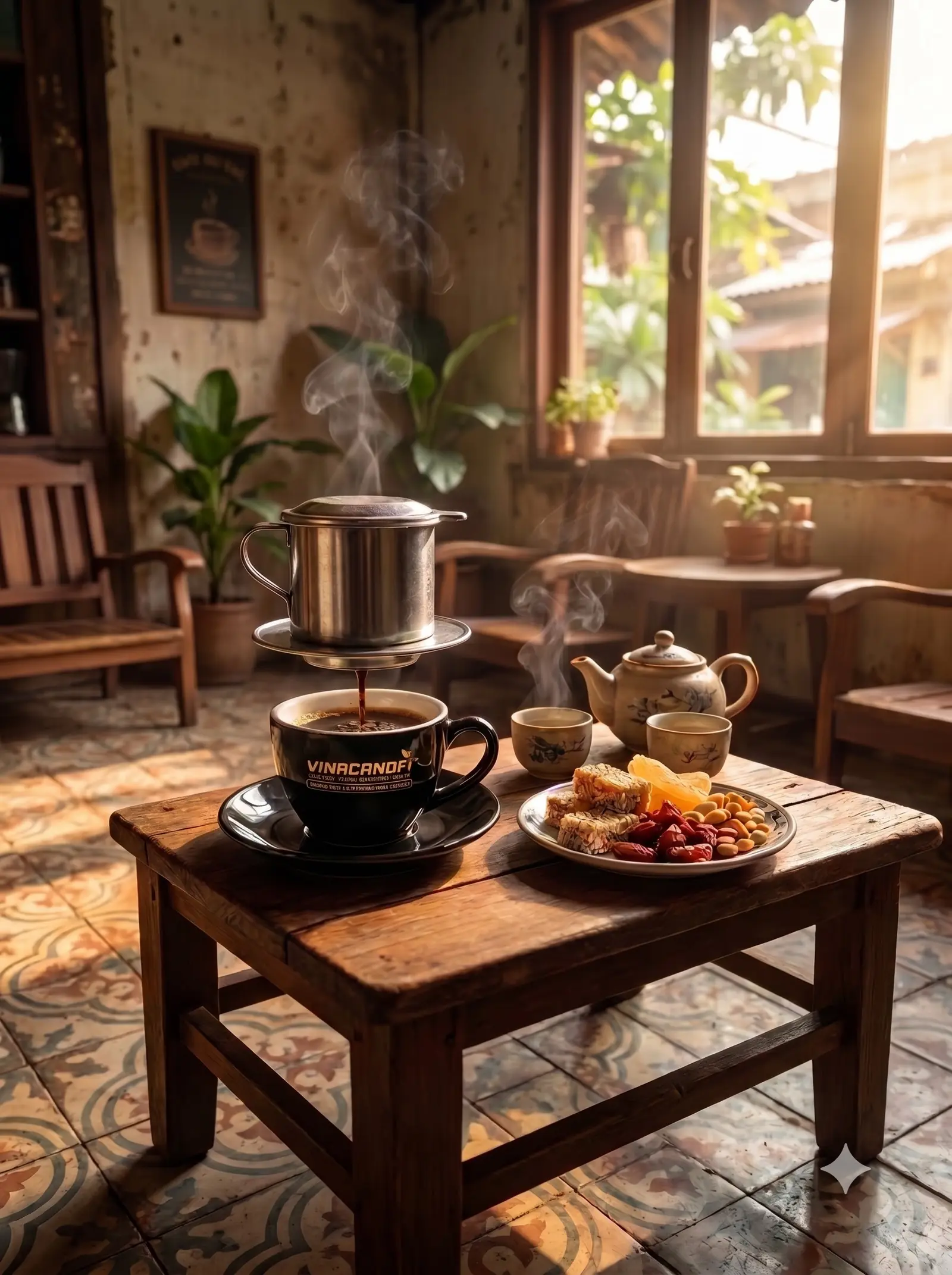
In many countries, people ask: are you a "tea person" or a "coffee person"? In Vietnam, that's a hard question. The same person might start the day with a cup of hot tea, order an iced milk coffee mid-morning, and brew a pot of tea for guests in the evening. Tea and coffee don't divide the world between them — they weave into every rhythm of daily life.
On the same street
Walk down almost any street in Hanoi or Saigon and you'll see this: an iced-tea stall with a few low plastic stools, and right next to it a sidewalk café with aluminium phins lined up on the table. Customers sometimes sit at one and order from the other. The two owners know each other; sometimes they're family.
Iced-tea stalls and sidewalk cafés have a lot in common:
- Cheap and close by. Anyone can sit down without planning ahead.
- Low stools by the road. You drink while watching the whole street go by.
- A place to talk. About the news, football, business, family.
Sidewalk Coffee Culture tells more about these small roadside spots.
A glass of iced tea with your coffee
A very Vietnamese habit: order a coffee, and a glass of iced tea comes with it. In many places that glass is free and can be refilled.
The iced tea has a few small roles:
- Cleansing the palate before drinking, so you taste the coffee more clearly.
- Softening the bitterness after a few strong sips.
- Quenching thirst in the heat, especially when the iced milk coffee is sweet.
- Keeping guests longer. The coffee is gone, the tea is still there — the conversation doesn't have to end.
Not every café does this, and the way it's served varies by region. But for many people, coffee without a glass of iced tea feels half-finished.
A day of tea and coffee
Habits differ from person to person, but a common daily rhythm might look like this:
| Time | Usually drunk | Setting |
|---|---|---|
| Early morning | Hot tea | At home before work, the first cup of the day for older people |
| Mid-morning | Coffee | Starting work, meeting partners, a break |
| After lunch | Iced tea or coffee | Quenching thirst, fighting drowsiness |
| Afternoon | Coffee or tea | Working, meeting friends |
| After dinner, with guests | Tea | Sitting around a teapot at home, talking |
This table is an everyday observation, not a survey. The rhythm can differ from family to family and region to region.

Offering tea, offering coffee — two kinds of hospitality
In a Vietnamese home, guests are usually offered tea. A hot pot, small cups, the host pouring for the guest — a familiar ritual that expresses respect.
When meeting outside, though, the usual phrase is "let's go for coffee". Coffee becomes the reason to meet: old friends, colleagues after work, partners discussing business.
The two invitations carry different tones:
- Offering tea is linked to the home, closeness and respect between generations.
- Offering coffee is linked to shared public space, openness and the pace of city life.
Vietnamese people use both naturally, depending on the situation, and nobody sees a contradiction.
Similarities and differences
Tea and coffee differ in plant, processing and taste. But in daily life they share a lot:
| Tea | Coffee | |
|---|---|---|
| Plant | The tea plant, grown in northern hills and the Central Highlands | The coffee plant, concentrated in the Central Highlands |
| Popular ways to drink | Hot tea, iced tea | Black phin, phin with milk, iced coffee |
| Setting | At home, iced-tea stalls | Sidewalk cafés, coffee shops, offices |
| Meaning | Hospitality, stillness | Meeting up, alertness, starting work |
Interestingly, parts of the Central Highlands grow both tea and coffee, and in some places tea hills and coffee gardens sit right next to each other. From their roots, the two drinks have been neighbours.
Intertwined, not replaced
Some worry that coffee will "crowd out" tea, or the other way round. Everyday life suggests otherwise. Young people may drink more coffee, but still sit at iced-tea stalls with friends. Older people stick to tea in the morning, but still go to the café to read the paper.
That intertwining is part of Vietnam's culture of enjoyment: not extreme, not rigidly divided, just blending together. The Way of Coffee looks at how a cup of coffee can carry the same unhurried spirit as a pot of tea.
Frequently asked questions
Why do Vietnamese cafés often serve iced tea with coffee?
The iced tea cleanses the palate before and after the coffee, softens the bitterness and quenches thirst in hot weather. It's also a familiar gesture of hospitality.
Which has more caffeine, tea or coffee?
Per typical cup, coffee usually has more caffeine than tea, but the amount depends on the tea leaves, the coffee and how they're brewed. Healthy adults are generally advised to stay under about 400 mg of caffeine a day (EFSA/FDA).
Is this article about mixing tea and coffee in one drink?
No. "Intertwined" here means tea and coffee both being part of everyday life, not a recipe that combines them in one cup.