
E22 · Coffee & the art of enjoyment
Coffee & Books
Why coffee and books go so well together, what a Vietnamese book café usually looks like, and how to set up a reading corner with a cup at home.
- Coffee knowledge
- Culture & lifestyle
- Updated 21 Oct 2026
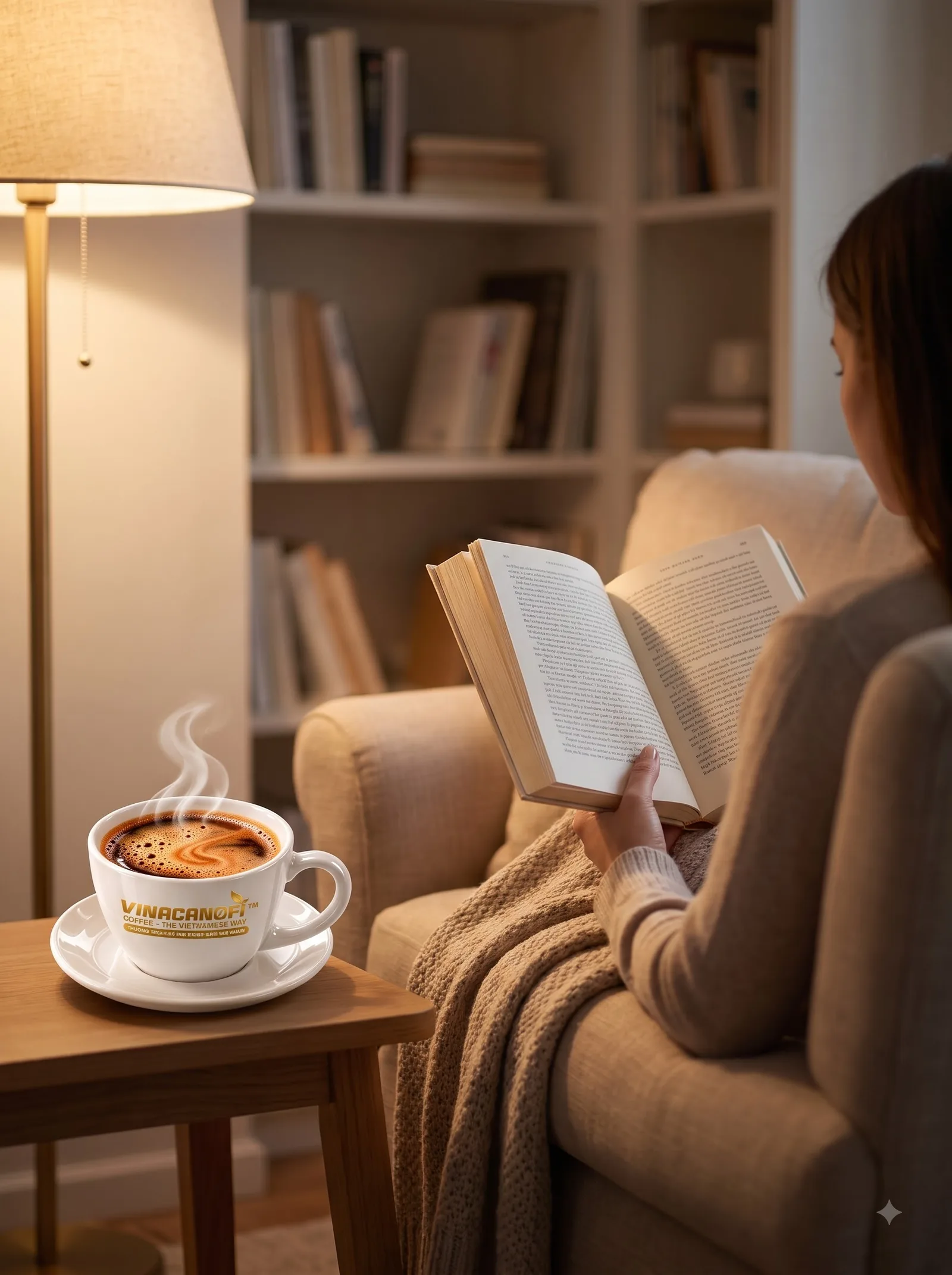
Some afternoons call for nothing more than a book and a cup of coffee. No need to go anywhere, no need to say anything. The coffee cools page by page, and by the time you look up, several chapters have gone by. In many Vietnamese cities, that scene has become a kind of café of its own: the book café.
This article looks at the bond between coffee and books, what you usually find in a book café, and how to make a reading corner with a cup of coffee at home.
Why do coffee and books go together?
Coffee and books share a rhythm: neither can be rushed. A phin takes a few minutes to drip. A book takes hours, sometimes weeks, to finish. Sitting with both, people naturally slow down.
There are also some very everyday reasons:
- Coffee keeps you alert. Many people find it easier to concentrate with a cup beside them, especially in the early afternoon.
- The cup is a natural "clock". When it's empty, it's time to stand up, stretch, and decide whether to keep reading.
- The smell of coffee feels familiar. For keen readers, the smell of roasted coffee is linked to a reassuring sense of "time to read".
Book cafés in Vietnam
There is no single template, but book cafés tend to share a few traits:
| Feature | What you usually find |
|---|---|
| Bookshelves | Books to read on the spot, sometimes a swap corner or second-hand books for sale |
| Sound | Soft music, instrumental music, or none at all |
| Seating | Separate tables, armchairs, sometimes floor cushions |
| Light | Large windows or soft yellow lamps, bright enough to read |
| House rules | Speak quietly, keep phone calls short, put books back where they belong |
The guests are just as varied: students revising, office workers wanting a quiet weekend afternoon, writers looking for somewhere to sit for hours undisturbed. What they share is a wish to be alone for a while, in a place where other people are around.
In a book café, people usually order drinks that last: black coffee, iced milk coffee, bạc xỉu. The cup isn't the centre of attention, but without it, part of the reading session would be missing.

A reading corner with coffee at home
You don't need a beautiful café to read. A small corner at home is enough if it has:
- Good light. Near a window by day, or a warm yellow desk lamp at night. Reading in poor light tires the eyes.
- A comfortable seat. A chair with back support and a small cushion — somewhere you can sit for a long time without backache.
- A small surface for your cup. On the side opposite your page-turning hand, with a coaster.
- Fewer phone notifications. The hardest step, and the most effective.
- A cup made the way you like it. It needn't be elaborate — what matters is that you enjoy it.
If you like a ritual, brew with a phin: while the coffee drips, choose your book and open it at your page. When the cup is ready, so are you. The Phin Filter — Icon of Vietnamese Coffee explains how to brew it step by step.
If you want something quick, instant coffee made in a minute still keeps the reading session whole. The amount of water is usually printed on the pack.
Matching coffee to the way you read
Different kinds of reading suit different kinds of coffee. These are suggestions, not rules:
- Technical books that need focus: a medium-strength hot black coffee, sipped slowly.
- A novel in the afternoon: iced milk coffee — sweet, cool and long-lasting.
- Poetry, or rereading an old favourite: a small, light cup, drunk while still warm.
- Reading at night: choose a lighter cup or drink it earlier, so caffeine doesn't keep you awake.
On caffeine, healthy adults are generally advised to stay under about 400 mg a day (EFSA/FDA). Children, teenagers and pregnant women should limit it and ask a doctor.
Small habits of readers who love coffee
People who often read with coffee tend to pick up small habits over time:
- Finishing a chapter before taking the next sip.
- Using a coaster as a bookmark (even though they shouldn't).
- Underlining favourite lines in the margin, along with a few coffee stains as "souvenirs".
- Getting up to make another cup when a passage gets hard, as a little break.
None of this is a big deal. But it shows that a cup of coffee is not only for drinking — it's part of how people make time for themselves.
Read on
Coffee goes with books, and also with music and with moments of quiet. Coffee & Music is about listening spaces with a cup in hand, and Coffee & Mindfulness is about drinking coffee slowly and attentively.
Frequently asked questions
Does coffee help you focus on reading?
Caffeine helps many people feel more alert for a while, but the effect varies from person to person. Healthy adults are generally advised to stay under about 400 mg of caffeine a day (EFSA/FDA); if you sleep poorly, avoid coffee in the evening.
What coffee is best for a long reading session?
One you can sip slowly without it losing its appeal — for example a medium-strength hot black coffee, or an iced milk coffee strong enough to keep its taste as the ice melts. Don't brew too strong if you plan to sit for hours.
How do I keep coffee off my books?
Put the cup on the side opposite the hand that turns pages, use a coaster and keep the cup away from the table edge. For precious books, use a cup with a lid.