E08 · Vietnamese brewing & coffee culture
Espresso Machines in Vietnam
How espresso machines came to Vietnam's city cafés, why Robusta suits espresso, Vietnamese machine-brewed drinks, and phin versus machine.
- Coffee knowledge
- About VINACANOFI
- Culture & lifestyle
- Updated 21 Oct 2026
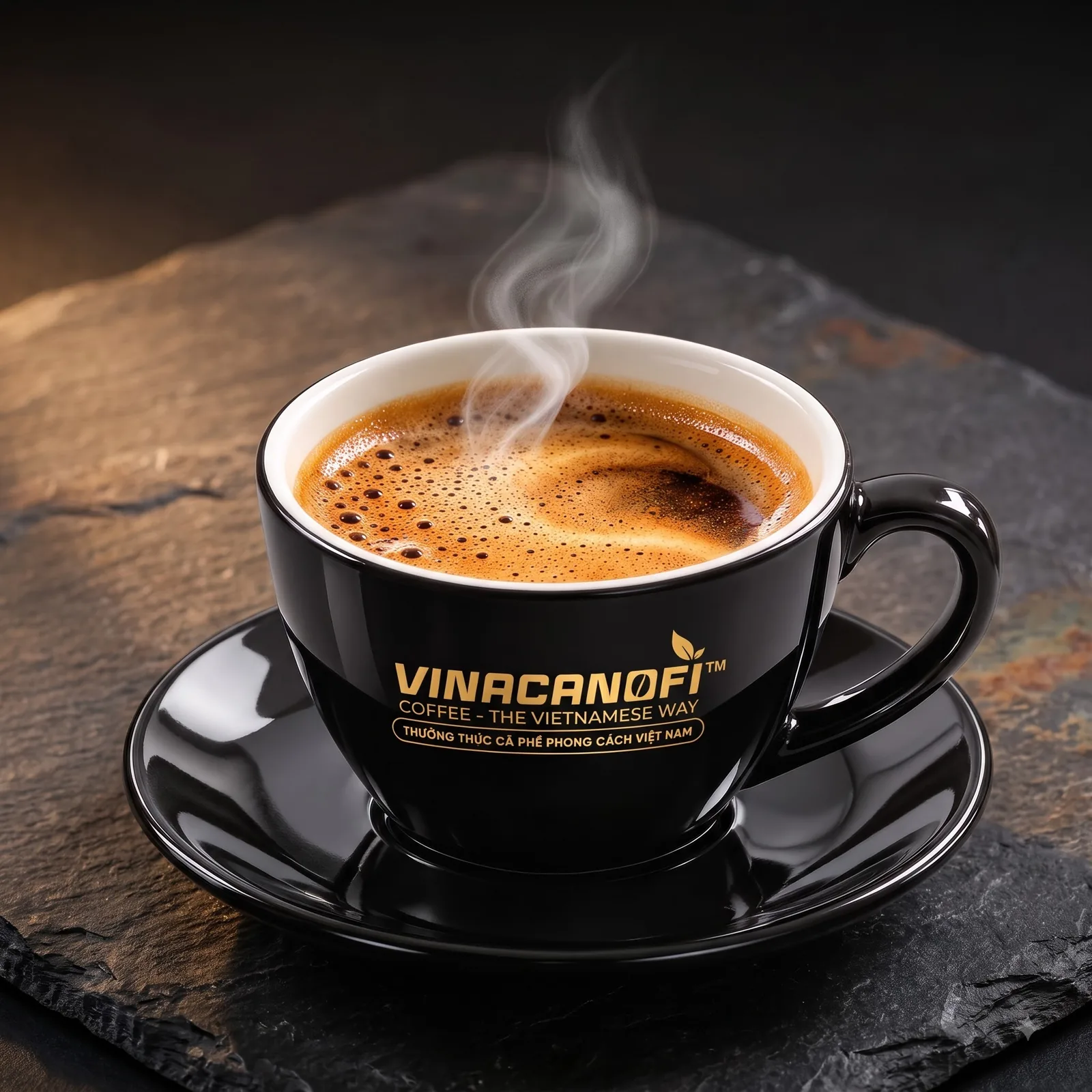
Walk into a café in central Hanoi or Ho Chi Minh City today and you will hear the hiss of a steam wand and the knock of a portafilter on a wooden box. The espresso machine has become a familiar sight in urban cafés, standing beside — not replacing — the aluminium phin.
This article looks at how Vietnamese drinkers embraced the espresso machine: why it became popular, why Vietnamese Robusta suits it so well, and the drinks that have been "Vietnamised" for the machine.
The espresso machine arrives in Vietnamese cafés
For decades, coffee in Vietnam almost meant phin coffee. Espresso machines appeared early in some hotels and cafés serving foreign visitors, but only became truly widespread as modern coffee chains expanded in the cities, alongside a younger crowd keen to try lattes and cappuccinos.
For café owners, the machine has clear advantages:
- Speed. A shot of espresso takes about 25–30 seconds, while a phin needs 4–5 minutes.
- Consistency. Once dose, grind and time are set, today's cup and tomorrow's are almost identical, whoever makes them.
- Variety. One shot of espresso is the base for dozens of drinks: latte, cappuccino, americano, blended ice drinks, milk drinks.
On the other hand, espresso machines are expensive, need maintenance and require trained baristas — which is why the phin remains firmly in place in everyday cafés and at home.
Why does Robusta suit espresso?
Traditional Italian espresso often blends Arabica with some Robusta. In Vietnam, Robusta is the main crop, and it brings its own character to espresso:
- Full body, bold bitterness. The flavour holds up when mixed with plenty of condensed milk or ice.
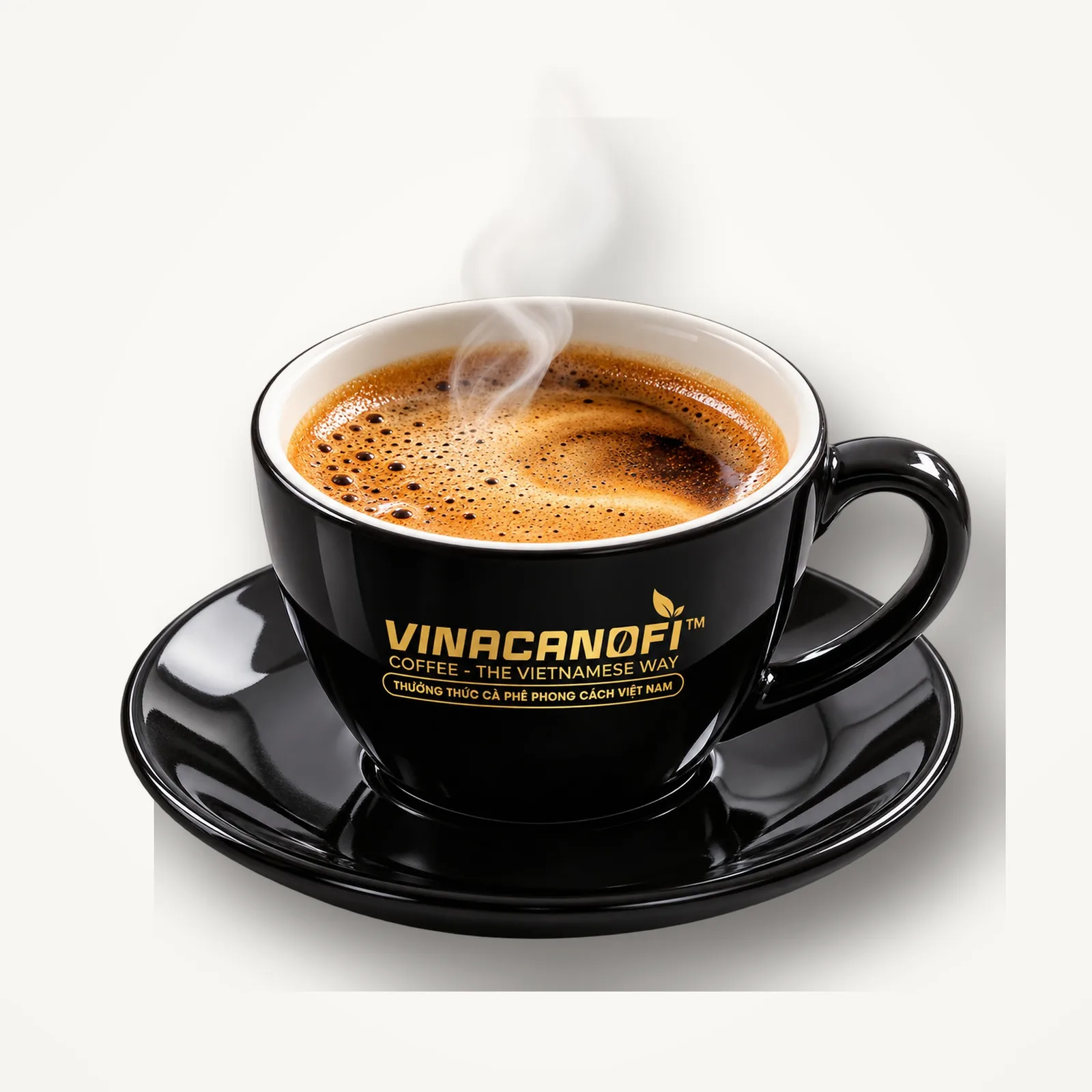
- Thick crema. Robusta usually produces a thicker, longer-lasting crema than Arabica.
- More caffeine. Robusta often contains close to twice as much caffeine as Arabica, matching the "strong, awakening" taste many Vietnamese drinkers like.
Many cafés use 100% Robusta for Vietnamese milk drinks, and add Arabica for espresso and americano for more aroma and brightness. There is no single recipe — every café has its own style.
Vietnamese-style "machine" drinks
What's interesting is that Vietnamese drinkers didn't just drink espresso the Italian way — they brought espresso into their own familiar drinks:
| Drink | Usual recipe | Compared with the phin version |
|---|---|---|
| Machine-brewed iced milk coffee | Espresso + condensed milk + ice | Cleaner, with crema, less roasty |
| Machine-brewed bạc xỉu | A little espresso + condensed milk + fresh milk + ice | Light, creamy, easy to drink |
| Coconut coffee | Espresso or phin coffee + blended coconut cream and ice | Rich, cool, coconut aroma |
| Iced americano | Espresso + water + ice | Lighter and cleaner than iced black phin coffee |
| Latte, cappuccino | Espresso + steamed fresh milk | International drinks, common in modern cafés |
In many cafés, the menu lists both "phin" and "machine" for the same drink, so customers can choose.
Phin or machine — how to choose?
The two methods don't replace each other; they offer different experiences.
| Phin | Espresso machine | |
|---|---|---|
| Principle | Gravity, drip | High pressure, about 9 bar |
| Time | 4–5 minutes | 25–30 seconds |
| Grind | Medium-fine | Fine |
| Taste | Heavy body, long finish, roasty aroma | Concentrated, with crema |
| Equipment cost | Very low | High |
| Best for | Lingering, home, sidewalk cafés | Busy cafés, many drinks |
If you love slowness and the traditional strong taste, the phin is still the easiest choice. If you need to make many drinks quickly for many people, the espresso machine is the efficient tool.
"Machine-style" coffee at home
You don't need a professional machine to try Vietnamese-style espresso at home:
- A moka pot makes strong, espresso-like coffee, good for milk coffee.
- A small home espresso machine — choose one with a portafilter and a steam wand if you like lattes.
- Whatever you use, grind just before brewing and keep the water at about 90–96 °C, as explained in Coffee Brewing Basics.
Two rhythms, one love of coffee
The sound of an espresso machine in an air-conditioned café and the quiet dripping of a phin on the sidewalk show that Vietnamese coffee now lives at two speeds: fast and slow. To explore more modern brewing methods, read Vietnamese-Style Pour-Over and Vietnamese-Style Cold Brew.
Frequently asked questions
How does machine-brewed milk coffee differ from phin-brewed?
The machine version is extracted quickly under pressure, so it has crema and a concentrated, often "cleaner" taste. The phin version drips slowly by gravity, giving a heavier body, a long finish and a distinctive roasty aroma. Many Vietnamese drinkers still find the phin version more "authentic", but it is a matter of taste.
Do I need an expensive machine to make espresso at home?
Not necessarily. A moka pot or a small home espresso machine can both make strong coffee for milk drinks. What matters more is fresh beans, ground to the right fineness just before brewing.
Is Robusta espresso too bitter?
Robusta is bolder and more bitter than Arabica, but when roasted and extracted well it gives dark chocolate, roasted-nut notes and a full body — excellent with milk. Many cafés blend Robusta with Arabica to balance strength and aroma.