E09 · Vietnamese brewing & coffee culture
Vietnamese-Style Pour-Over
What pour-over is, why paper-filter coffee is growing in popularity in Vietnam, how to brew a cup at home and which Vietnamese beans to choose.
- Coffee knowledge
- About VINACANOFI
- Culture & lifestyle
- Updated 21 Oct 2026
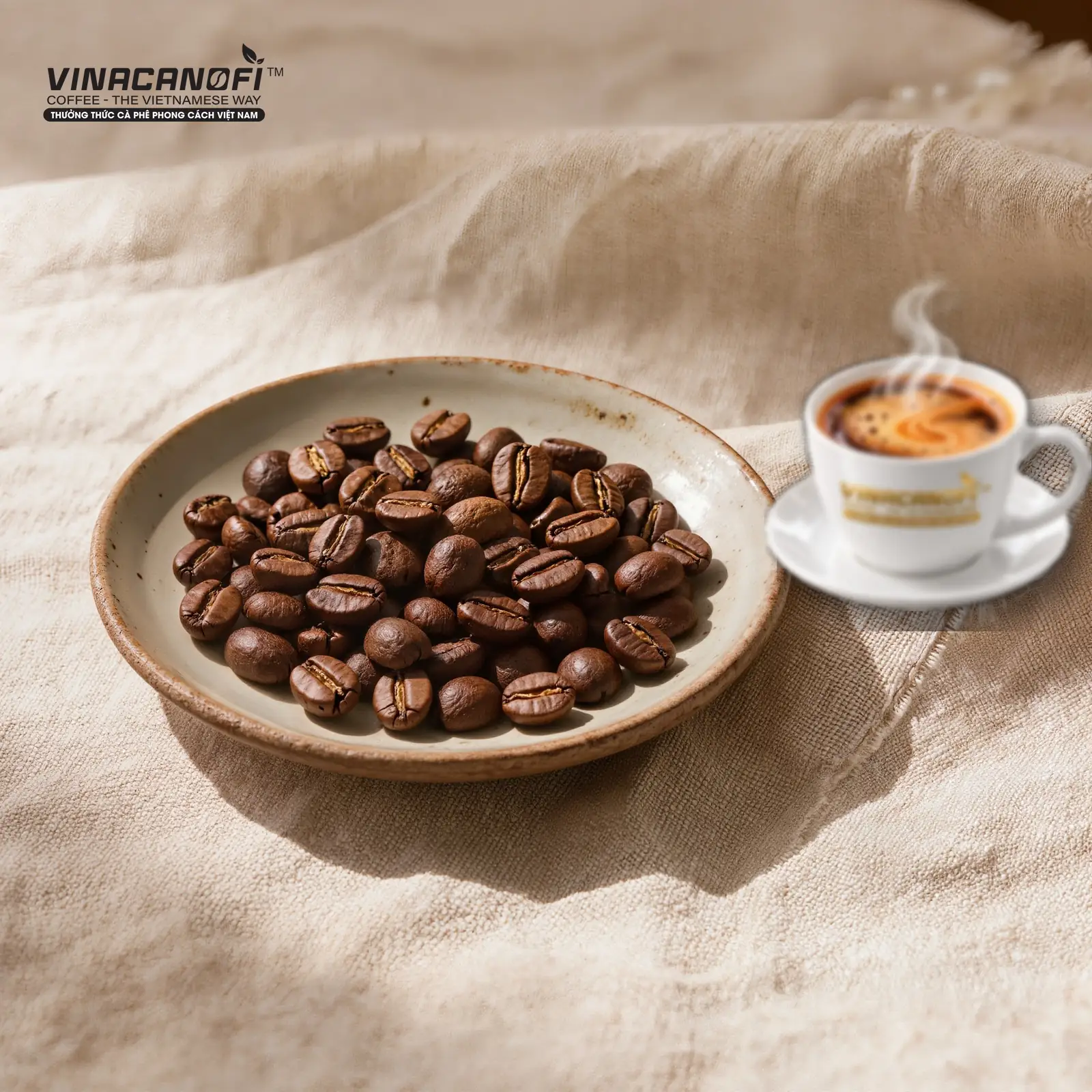
In recent years, the counters of many Vietnamese cafés have filled with tools that were once rare: cone-shaped drippers, long gooseneck kettles, small digital scales. The barista stands pouring water in slow circles, one eye on the timer. This is pour-over — a manual method closely tied to the specialty coffee movement around the world.
Some people jokingly call it the "paper phin": it still drips by gravity like a phin, but with paper in place of the metal filter. This article explains what pour-over is, why Vietnamese drinkers have taken to it, and how to brew a cup at home.
What is pour-over?
Ground coffee sits in a dripper lined with a paper filter, the brewer slowly pours hot water over it, and coffee flows into a carafe or cup below. A few common dripper types:
- Cone drippers with spiral ribs and one large hole at the bottom — you control the flow by how you pour.
- Flat-bottom drippers with three small holes — an even flow, easy to brew consistently.
- Glass carafes with thick paper filters — good for larger batches, a very clean cup.
The paper traps most of the oils and fine particles. That's why a pour-over is usually clean, light and aromatic — the acidity, floral, fruity or chocolate notes of each bean come through more clearly than in a phin.
Why is pour-over popular in Vietnam?
Pour-over travels with the specialty coffee movement, which treats coffee like wine: paying attention to region, variety, processing and roast date. In Vietnam, this movement has grown noticeably in recent years in the big cities and in growing regions such as Đà Lạt.
A few reasons it has been embraced:
- Young drinkers want new flavours. A light-roast Arabica pour-over tastes very different from the familiar iced milk coffee.
- Domestic farmers and roasters invest more in quality: selective picking of ripe cherries, honey and natural processing, controlled fermentation.
- The tools are cheap and easy to use at home. A plastic dripper, filter papers and a pouring kettle are enough to start.
- Drip bags — a shortcut version of pour-over — are handy for the office and for trips.

Brewing a pour-over at home
This starting recipe is easy to remember and easy to adjust:
- Coffee: 15 g, medium grind (like granulated sugar).
- Water: 250 ml, at about 92–94 °C.
- Ratio: about 1:16–1:17.
Steps:
- Fold and place the filter in the dripper, rinse it with hot water to remove the paper taste and warm the dripper and cup. Discard the rinse water.
- Add the coffee and shake gently to level the bed.
- Bloom: pour about 30–40 ml of water, just enough to wet all the grounds, and wait 30–45 seconds. The coffee will swell and bubble.
- Keep pouring slowly in circles from the centre outwards, avoiding the paper walls. Split it into 2–3 pours until you reach 250 ml.
- Let it drain completely. Total time is about 2.5–3.5 minutes.
If it runs too fast and tastes sour and weak, grind finer. If it runs too slowly and tastes bitter and harsh, grind coarser. These general principles are in Coffee Brewing Basics.
Which Vietnamese beans to choose?
Pour-over reveals bean quality, so it is a great way to taste Vietnamese coffee by region:
| Bean type | Typical growing area | Common taste as filter coffee |
|---|---|---|
| Washed Arabica | Cầu Đất (Lâm Đồng), Sơn La | Bright, clean, fruity |
| Honey and natural Arabica | Lâm Đồng, Gia Lai | Sweeter, ripe-fruit notes |
| High-quality Robusta (Fine Robusta) | Central Highlands | Full body, dark chocolate, roasted nuts, sweet finish |
For pour-over, light to medium roasts usually show aroma better than very dark roasts. For Robusta, use a medium roast and a little more water (about 1:17) so the cup isn't too heavy.
Phin and pour-over: two siblings
| Phin | Pour-over | |
|---|---|---|
| Filter | Metal | Paper |
| Grind | Medium-fine | Medium |
| Coffee : water ratio | About 1:4 – 1:6 | About 1:15 – 1:17 |
| Taste | Strong, full-bodied, good with milk | Clean, light, aromatic |
| How it's drunk | Condensed milk, ice, sipped slowly | Black, hot or left to cool gradually |
The two methods don't exclude each other. Many people still drink an iced milk phin coffee in the morning and brew a pour-over on a weekend afternoon to taste new beans. If you like cold coffee without harshness, read on with Vietnamese-Style Cold Brew.
Frequently asked questions
How is pour-over different from a phin?
Both use gravity, but pour-over uses a paper filter, a coarser grind and much more water, so the cup is lighter, cleaner and more aromatic. The phin uses a metal filter, a finer grind and little water, for a strong, full-bodied cup that suits milk.
Are drip bags a kind of pour-over?
You can think of them as a shortcut pour-over. A paper filter bag with pre-ground coffee hooks onto the rim of a cup, and you just pour hot water slowly. Convenient for the office and travel, though harder to control than a dripper and gooseneck kettle.
Can Robusta be brewed as pour-over?
Yes. High-quality, carefully processed Robusta (such as honey or natural) at a medium roast can make a sweet, full-bodied pour-over with chocolate and roasted-nut notes. Many cafés in Vietnam now offer Robusta on their filter menus.