E29 · Tasting & standards
Coffee Industry Standards & Certifications
Green coffee grading, SCA/CQI scoring, Fine Robusta, HACCP, ISO 22000 and sustainability labels — what each one actually tells you.
- Coffee knowledge
- About VINACANOFI
- Updated 21 Oct 2026
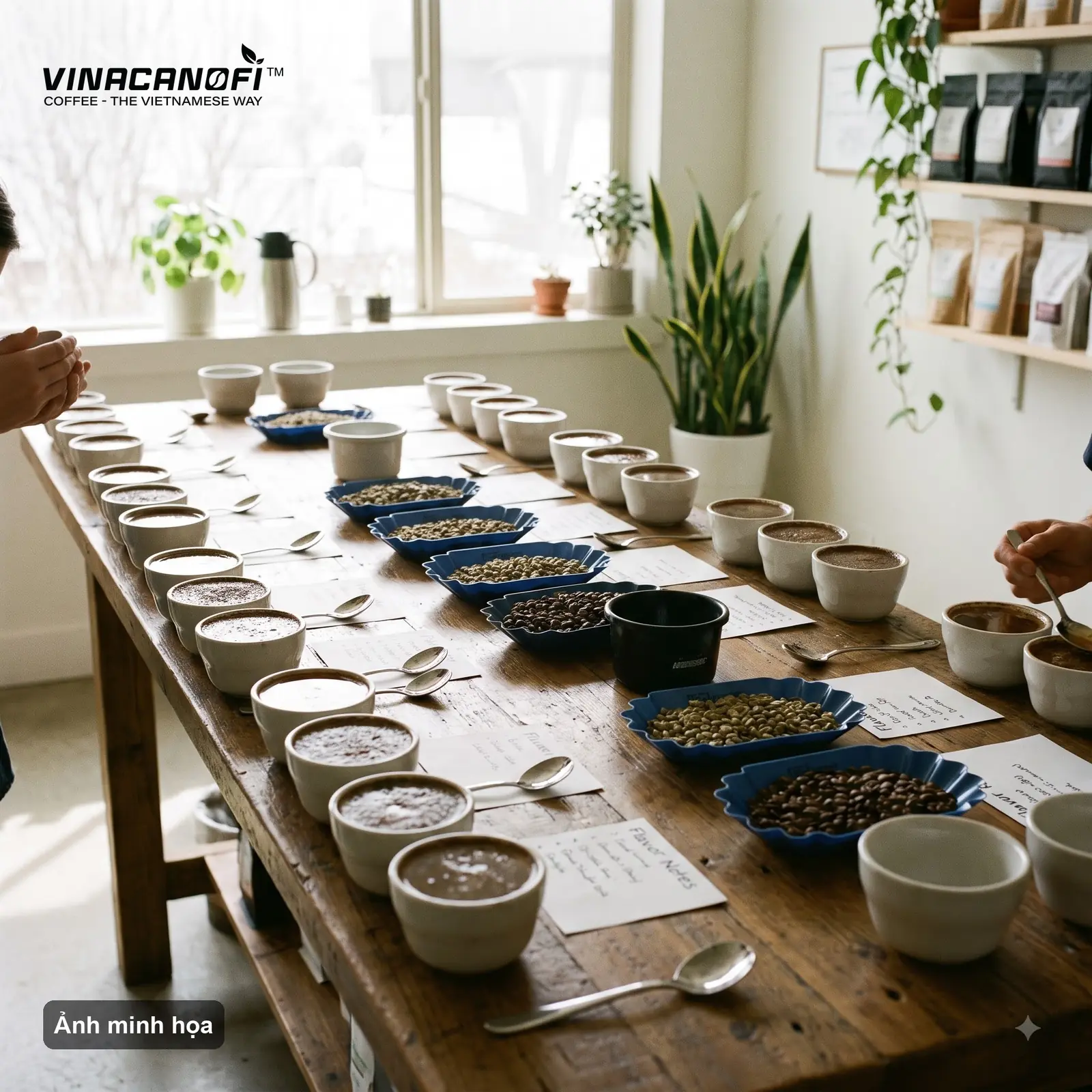
On a coffee pack you may find plenty of numbers and logos: "screen 18", "A Grade", "Fine Robusta", HACCP, ISO 22000, sustainability seals… Each one answers a different question. Some are about bean size, some about flavour, some about food safety, some about how the coffee was grown.
This article helps you tell them apart, so you can read a pack more accurately.
Four main groups of standards
| Group | Question it answers | Examples |
|---|---|---|
| Green coffee grading | Are the beans even, clean, low in defects? | Screen size, defect count, moisture; TCVN 4193 in Vietnam |
| Flavour scoring | Does the coffee taste good, and how good? | SCA form for Arabica, Fine Robusta form (CQI/UCDA) |
| Food safety | Was the product made safely? | HACCP, ISO 22000 |
| Sustainability | How was the coffee grown and traded? | 4C, Rainforest Alliance, Fairtrade, organic |
These groups complement each other rather than replace one another. A lot can rank highly on bean size but score only average on flavour, or the other way round.
Grading green coffee: screen size, defects, moisture
Before roasting, green coffee is graded on a few criteria:
Screen size. Beans are passed through screens with round holes, numbered in units of 1/64 inch. Screen 18 has holes of about 7.1 mm, screen 16 about 6.3 mm, screen 13 about 5.0 mm. In trade you'll hear terms like "Robusta screen 18" or "R1 S16". Evenly sized beans roast more evenly.
Defects. Defective beans are counted in a standard sample: black, broken, mouldy and insect-damaged beans, plus foreign matter such as stones, twigs and husks. Serious defects like black or mouldy beans affect flavour strongly, so they count more heavily.
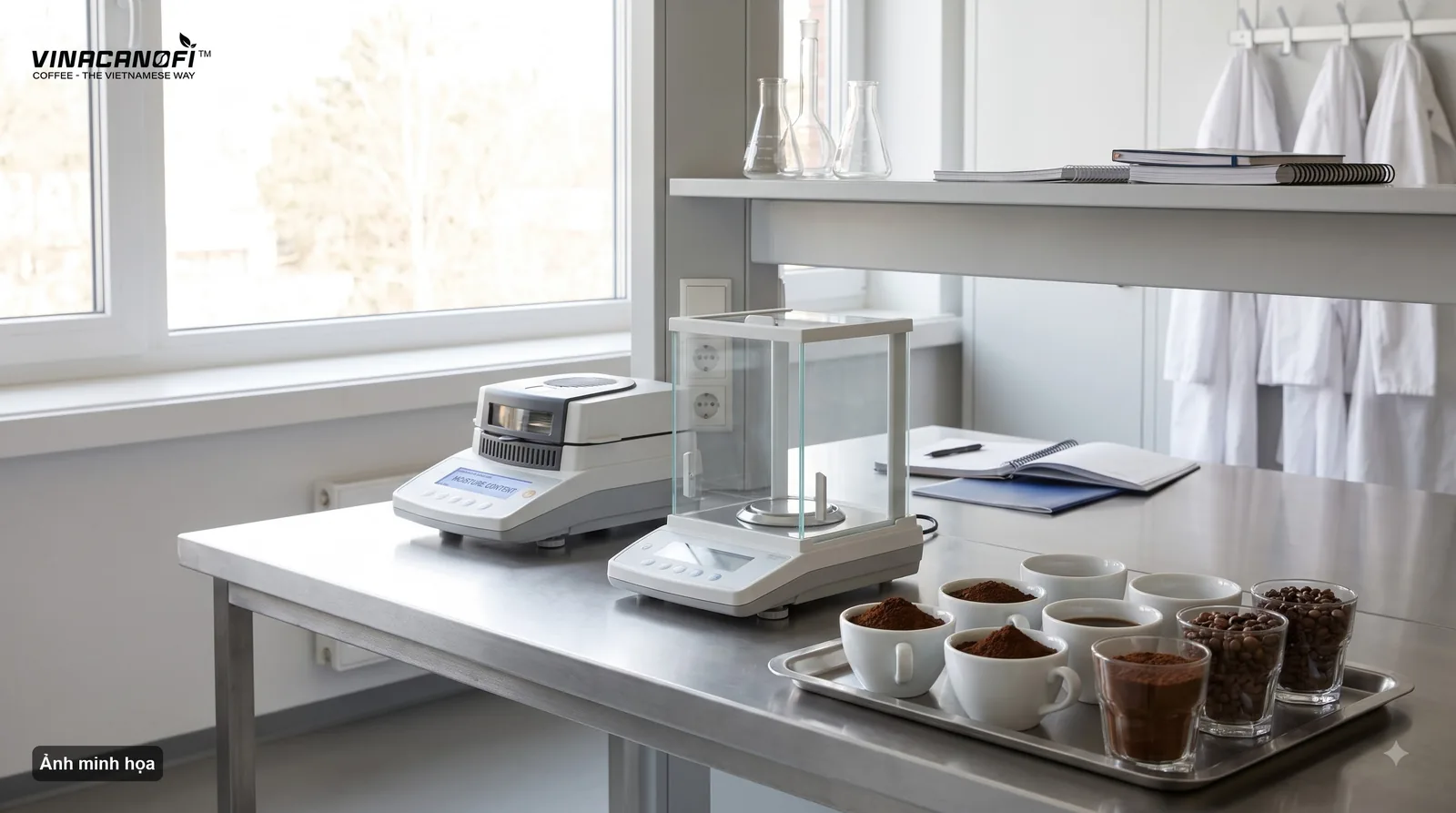
Moisture. Green coffee must be dry enough to store safely without mould. A typical level is around 10–12%, depending on the standard.
In Vietnam, the national standard TCVN 4193:2014 sets technical requirements for green coffee, including grading by bean size, defect rate and moisture. Other countries and exchanges have their own standards.
Flavour scoring: SCA, CQI and Fine Robusta
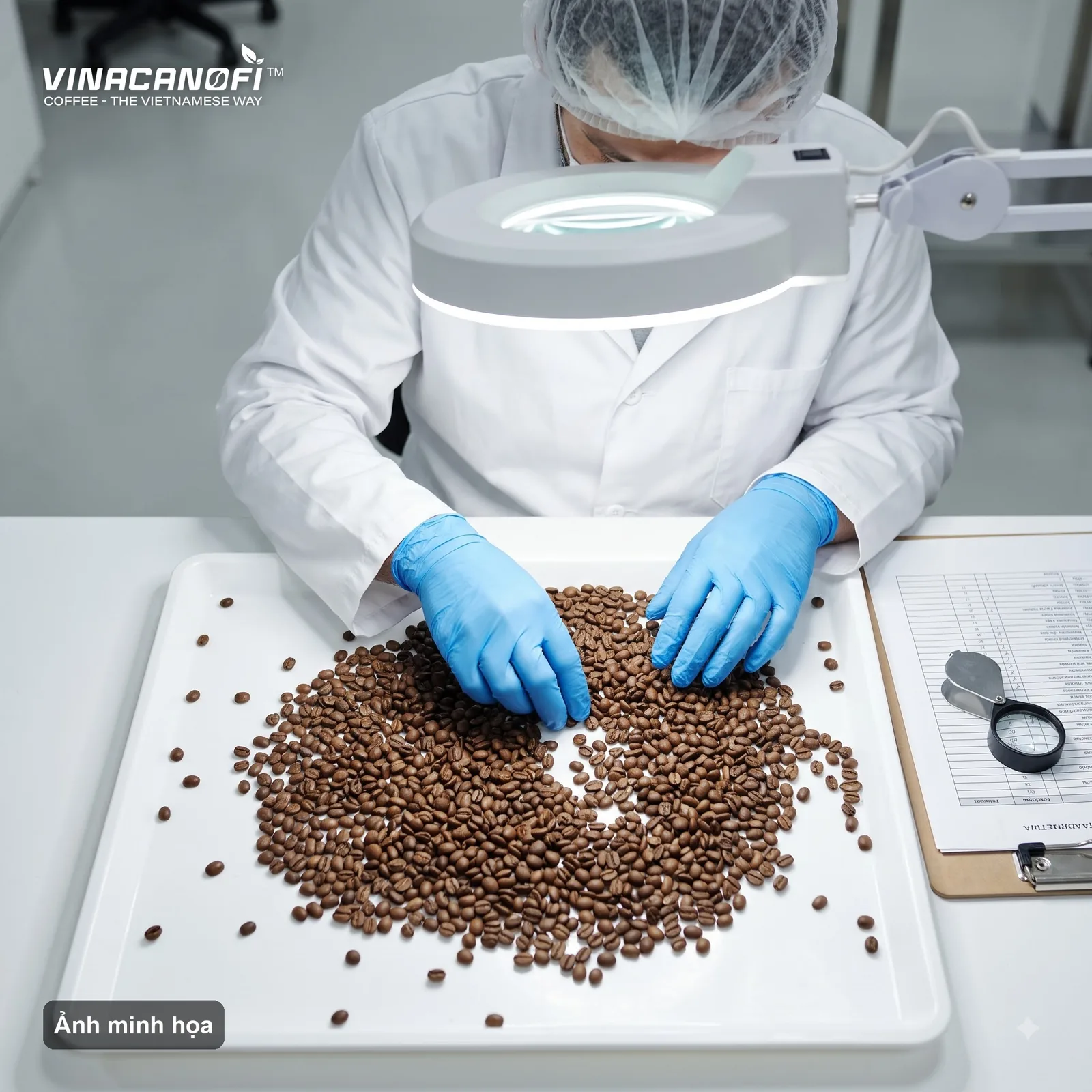
Grading tells you whether the beans are "clean"; cupping tells you whether they taste good. Samples are lightly roasted to a standard, brewed under the same conditions and scored out of 100 by certified tasters.
- SCA (Specialty Coffee Association) developed the widely used score sheet for Arabica. Coffee scoring 80 or above is called specialty.
- CQI (Coffee Quality Institute) trains and certifies tasters (Q Graders).
- Fine Robusta is the equivalent level for Robusta, using a form developed by CQI with the Uganda Coffee Development Authority (UCDA). Scores of 80 and above fall into this group.
How to Evaluate a Great Cup of Coffee explains the scoring criteria in detail.
Food safety: HACCP and ISO 22000
These two certifications aren't about flavour but about safe production processes.
- HACCP (Hazard Analysis and Critical Control Points) is a method for identifying hazards — biological, chemical, physical — at each stage, then setting control points to prevent them. In Vietnam, HACCP is applied under TCVN 5603, which follows the Codex general principles of food hygiene.
- ISO 22000 is the international standard for food safety management systems. It includes HACCP principles and adds requirements for management, records, training, traceability and continual improvement.
Both are usually issued to a production facility, not to individual packs. They have an expiry date and require regular re-assessment.
Sustainability certifications
This group is about how coffee is grown and traded:
- 4C — a baseline code of sustainable practice in coffee production: environmental, social and economic.
- Rainforest Alliance — focuses on protecting forests, biodiversity and the livelihoods of farm workers.
- Fairtrade — aims for fairer trade, with a minimum price mechanism and a premium for farming communities.
- Organic — farming without synthetic fertilisers or pesticides, according to each scheme's rules (EU, US, Japan…).
These certifications carry ethical and environmental value, but they don't mean better flavour as such.
How to read a certificate
When you see a certificate, ask three questions:
- What does it certify? A lot of beans, a factory, or a farm?
- Who issued it? An independent certification body with a clear name and address?
- Is it still valid? Most certificates have an issue date and an expiry date.
Read on
Standards help us trust quality, but coffee's story goes further than that. 168 Years of Vietnamese Coffee follows Vietnamese coffee from its first trees to where it stands today.
Frequently asked questions
What does "screen 18" mean?
It means green beans that stay on a screen with holes of 18/64 inch (about 7.1 mm). The higher the screen number, the bigger the bean. Even sizing helps even roasting, but bigger beans don't automatically taste better.
How are HACCP and ISO 22000 different?
HACCP is a method for analysing hazards and controlling critical points in food production. ISO 22000 is an international standard for food safety management systems; it includes HACCP principles plus requirements for management, records and continual improvement.
Does organic certification make coffee taste better?
Not necessarily. Organic is about farming — no synthetic fertilisers or pesticides, according to each certification scheme's rules. Flavour still depends on variety, origin, processing and roasting.