E30 · Journey & brand
168 Years of Vietnamese Coffee
From the first coffee trees in 1857 to one of the world's largest coffee producers — the key milestones in the story of Vietnamese coffee.
- Coffee knowledge
- About VINACANOFI
- Updated 21 Oct 2026

A morning cup of coffee in Vietnam today carries a longer story than many people realise. It begins in the mid-19th century, passes through the colonial era, war and the hard years after reunification, then enters the period of opening up that put Vietnamese coffee on the world map.
This article walks through the main milestones. They reflect widely known industry history; exact dates and figures can differ slightly between sources.
The beginning: 1857
According to commonly cited industry history, coffee was brought to Vietnam by French missionaries in 1857 and planted on a trial basis in the north. At the time it was an unfamiliar plant, tended in church gardens; nobody yet imagined growing it on a large scale.
From 1857 to 2025 is exactly 168 years. That's where the "168 years" and the "Since 1857" in the VINACANOFI brand story come from — a milestone in the history of Vietnamese coffee, not the year the company was founded.
Key milestones
| Period | Milestone | Significance |
|---|---|---|
| Around 1857 | Coffee is brought to Vietnam | The starting point of Vietnamese coffee |
| Late 19th – early 20th century | Coffee plantations expand and gradually reach the Central Highlands | The Highlands begin to become coffee country |
| 1920s–1930s | Plantations develop in Đắk Lắk, around Buôn Ma Thuột | Buôn Ma Thuột becomes known as the "coffee capital" |
| 1975 | Reunification; production organised through state farms | A period of post-war rebuilding |
| 1986 | Đổi Mới reforms; households encouraged to grow coffee for export | A turning point for area and output |
| Late 1990s | Phin coffee drinking spreads at home; domestic brands take shape | Vietnamese coffee develops its own identity |
| Around 2000 | Vietnam rises among the largest coffee exporters, often cited as second after Brazil | A global position confirmed |
| 2010s | The specialty coffee wave reaches Vietnamese cities | More varied ways of enjoying coffee |
| Today | Vietnam is one of the world's largest coffee producers and leads in Robusta | The link to the journeys of a new generation of brands |
The Central Highlands — where coffee found its home
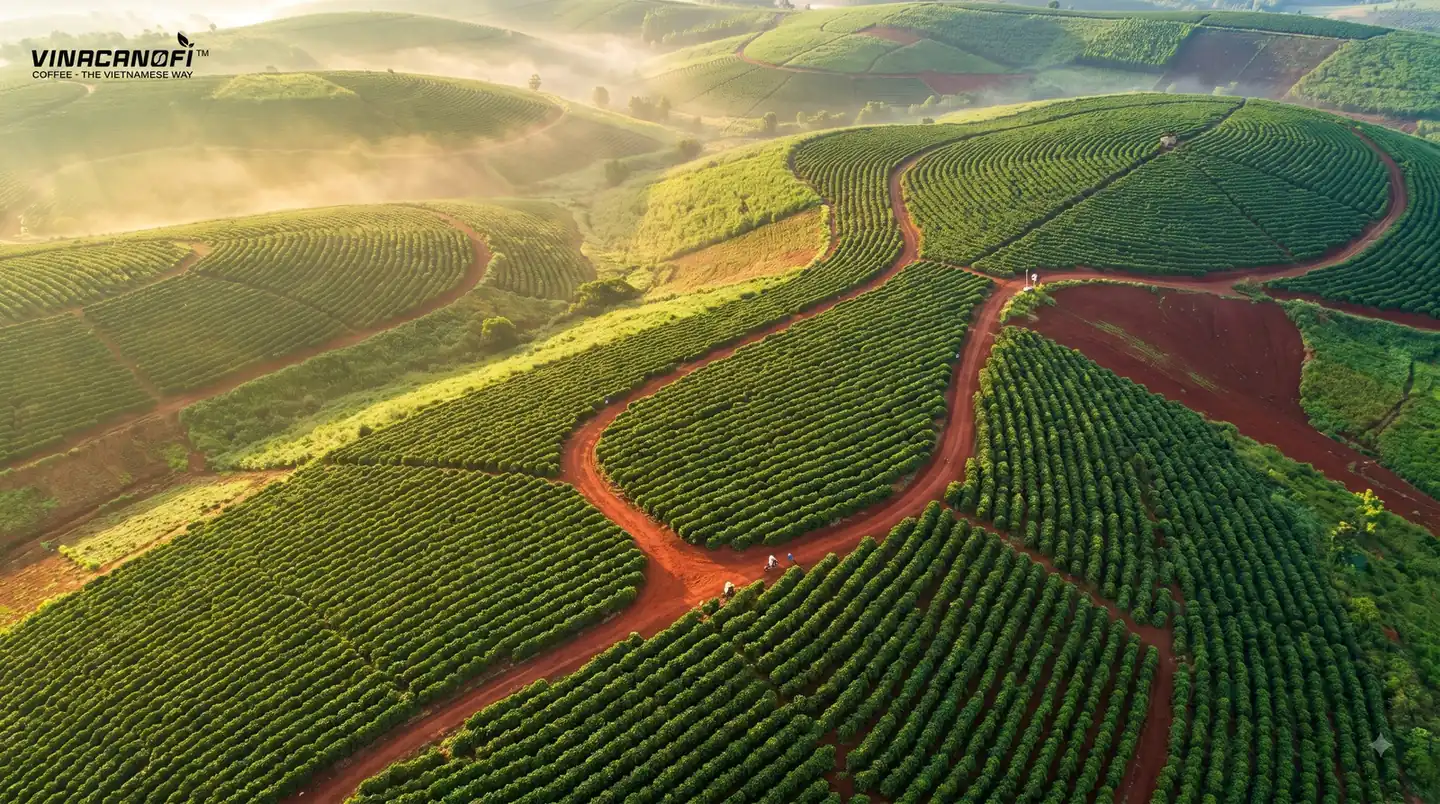
Coffee travelled a long way from the north to the Central Highlands. There it found exactly what it needed: loose red basalt soil, altitudes of about 500–1,000 m in many areas, and distinct rainy and dry seasons.
Robusta suits the Highlands especially well. The plant tolerates heat, resists pests and yields heavily. Over time, Đắk Lắk, Gia Lai, Lâm Đồng, Đắk Nông and Kon Tum became the country's major coffee provinces. How Is Coffee Grown? explains these natural conditions in more detail.
Đổi Mới and the great leap
Before 1986, Vietnamese coffee was mostly produced on state farms. After Đổi Mới, households were allocated land and encouraged to grow export crops. Coffee area grew quickly, especially in the Central Highlands.
In little more than a decade, Vietnam went from a small producer to one of the world's major coffee suppliers. That growth rests on the work of millions of farming households — pruning, watering and picking season after season.
From exporting beans to a distinct identity
For a long time, Vietnamese coffee was known mainly as a source of green coffee for export. Alongside that, however, Vietnamese people developed a very particular way of drinking it:
- The phin — a small filter that drips slowly for a strong cup.
- Iced milk coffee — coffee with condensed milk and ice, now the nation's favourite drink.
- Sidewalk culture — low plastic stools and small stalls where everyone meets.
In recent years, specialty coffee, new brewing styles and processed products such as instant and packaged roasted coffee have opened up many new directions. The Phin Filter — Icon of Vietnamese Coffee and Vietnamese Iced Milk Coffee — the Nation's Favourite Drink tell more about that identity.
A heritage to carry forward
168 years is a long road. But heritage isn't meant to stand still. Each generation of growers, roasters and brewers adds to the shared story of Vietnamese coffee.
Read on
The shared journey of Vietnamese coffee is the backdrop for each brand's own story. The final article in the library, The VINACANOFI Journey — From Farm to Cup, follows the road from Central Highlands coffee gardens to your cup.
Frequently asked questions
Why 168 years?
According to commonly cited industry history, coffee arrived in Vietnam in 1857. From 1857 to 2025 is 168 years. This is the figure used in the VINACANOFI brand story, alongside the words "Since 1857".
Is "Since 1857" the year VINACANOFI was founded?
No. 1857 is the year coffee arrived in Vietnam according to industry history, not the company's founding year. VINACANOFI uses it to speak about the Vietnamese coffee heritage the brand carries on.
Why does Vietnam grow more Robusta than Arabica?
Robusta suits the warm climate and moderate altitude of most of the Central Highlands, resists pests well and yields heavily. Arabica needs higher, cooler ground, so it's grown only in certain areas such as Lâm Đồng, Sơn La and Quảng Trị.