E31 · Journey & brand
The VINACANOFI Journey — From Farm to Cup
The closing article: the journey of a cup of coffee, from Central Highlands gardens through processing and testing to your cup.
- Coffee knowledge
- About VINACANOFI
- Updated 21 Oct 2026
This library began with a simple question: how is coffee grown? The thirty articles that followed travelled through coffee gardens, processing yards, sidewalk stalls, offices, reading corners and tasting rooms. This final article retraces the whole journey — this time through the story of VINACANOFI.
A name that introduces itself
VINACANOFI™ is a compound name, each part with its own meaning:
| Part | Meaning |
|---|---|
| VINA | Vietnamese Origin |
| CA | Café / Coffee — coffee at the heart of the brand |
| NO | Natural Origin — excellence begins with soil, climate and people |
| FI | Finest — the pursuit of quality |
Alongside the name come the line "Coffee — The Vietnamese Way" and the promise "From Vietnam to the World". "Since 1857" on the pack is the year coffee arrived in Vietnam according to industry history — a story told in 168 Years of Vietnamese Coffee.
Stage 1 — The coffee garden
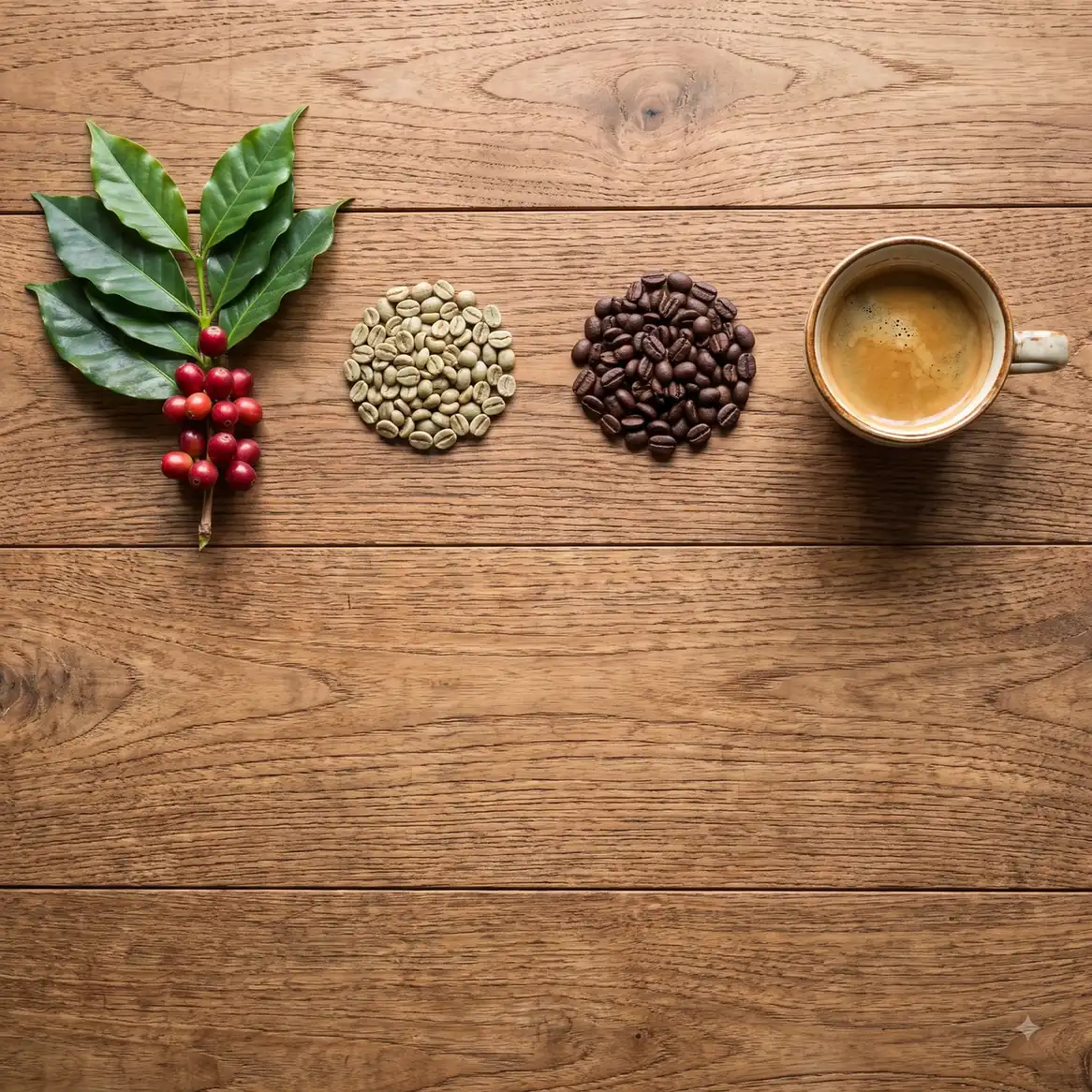
Every cup begins with a small shrub. In the Central Highlands, coffee grows on red basalt soil, flowering after the dry season and filling its cherries in the rainy season. From planting to the first substantial harvest usually takes about 3–4 years.
Farmers are at the heart of this stage: pruning, fertilising, watering through the dry months, then picking when the cherries ripen. How Is Coffee Grown?, Coffee Care & Harvest and Coffee for Farmers go into more detail.
Stage 2 — From cherry to green bean
After picking, cherries are processed to free the beans: dried whole (natural), pulped with some mucilage left on (honey), or fermented and washed (washed). Each method gives a different flavour style. The beans are then dried to a safe moisture level, hulled and graded by screen size and defects.
Post-Harvest Processing explains each method, and Coffee Industry Standards & Certifications covers how green coffee is graded.
Stage 3 — Testing
To learn "how good" a lot of coffee is, samples go to cupping: lightly roasted to a standard, brewed under the same conditions and scored by certified tasters. To learn whether the product is safe, finished goods are sent to a laboratory to check quality and food-safety indicators.
The two kinds of testing answer different questions — and both are needed. How to Evaluate a Great Cup of Coffee covers cupping in depth.
Stage 4 — Three product lines
From the same growing region, coffee can take several paths:
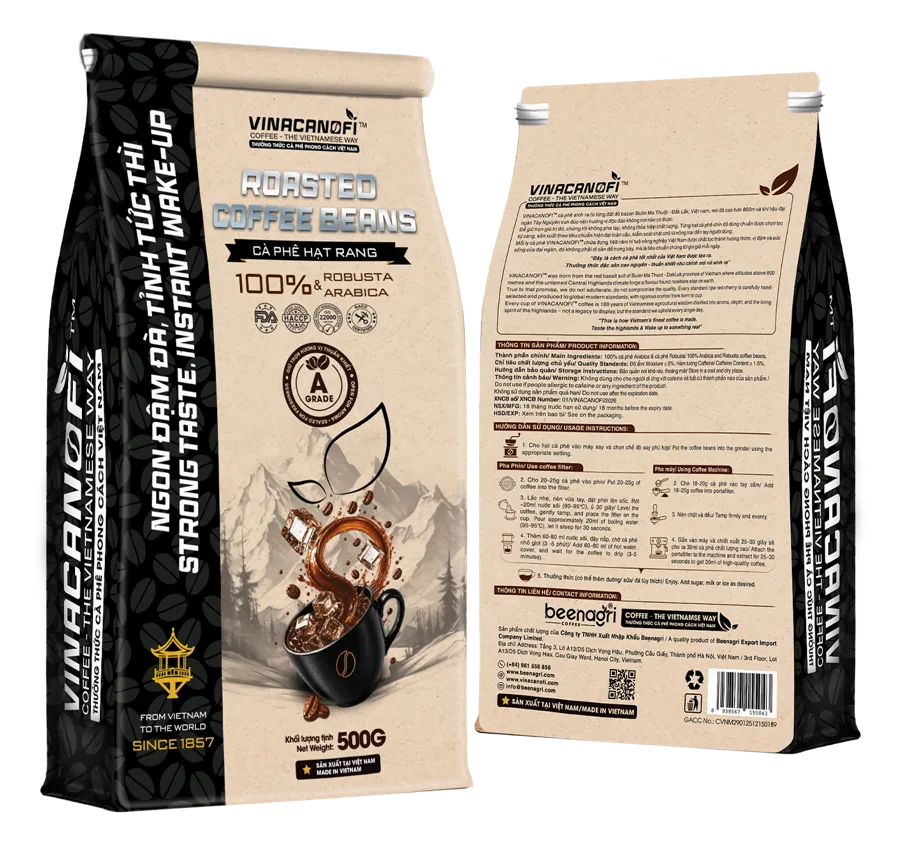
- Roasting — beans are roasted to unlock their flavour, then ground and brewed with a phin, pour-over or machine.
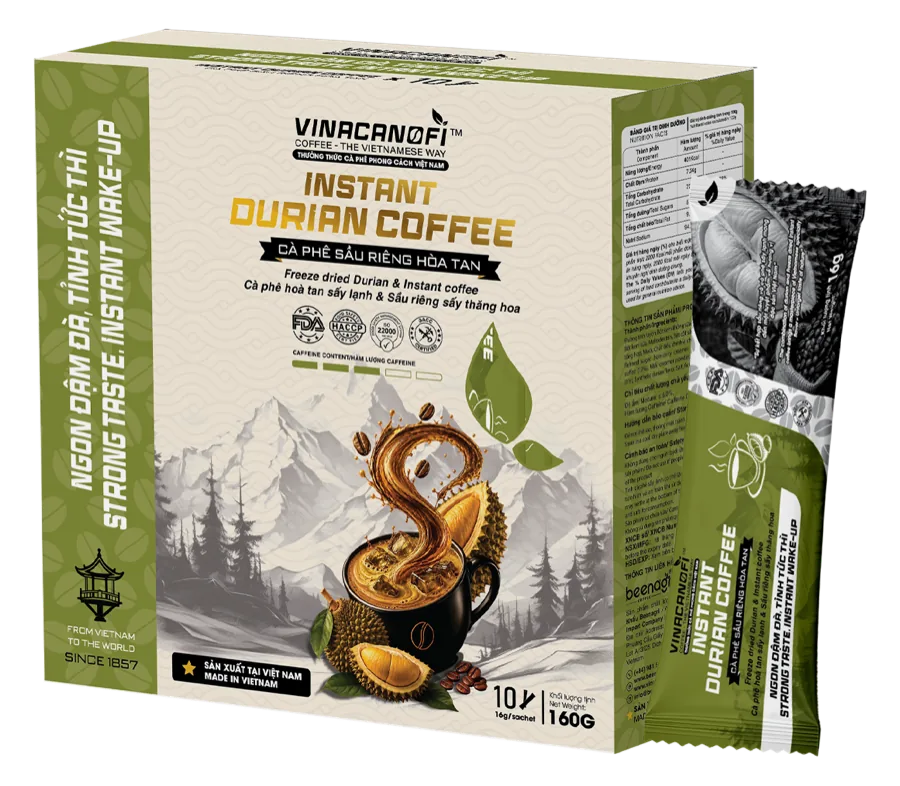
- Freeze-dried instant — coffee is extracted, then frozen and dried at low temperature, so all you need to add is water.
- Pairing with other Vietnamese ingredients — such as durian, a signature tropical fruit flavour.
Stage 5 — Your cup
The last stage is in the drinker's hands. A slow phin in the morning, an iced milk coffee at noon, a quick instant cup before a meeting. At a sidewalk stall, at the office, beside a book or in the middle of a football night. The library has visited many such moments:
- Brewing: Coffee Brewing Basics, The Phin Filter — Icon of Vietnamese Coffee.
- Culture: Sidewalk Coffee Culture, Tea & Coffee — an Intertwined Culture.
- Slow living: Coffee & Mindfulness, The Way of Coffee.
From Vietnam to the world
The journey from farm to cup doesn't end with one cup. Every time someone, anywhere, brews a Vietnamese coffee the Vietnamese way, the journey continues.
That's what "From Vietnam to the World" means: carrying not just the beans far away, but the way they are grown, brewed and enjoyed. Thank you for reading to the last article in the library. If you'd like to start again, go back to the first one — How Is Coffee Grown?
Frequently asked questions
Which product does the "A Grade" label apply to?
Only the Roasted Coffee Beans line. It is based on the cupping result of the Robusta sample RO1 (Chư Pơng, Gia Lai) at Stone Village Lab — 81.00 points, "Very Good · Fine Robusta" on the CQI/UCDA form.
Is "Since 1857" VINACANOFI's founding year?
No. It's the year coffee arrived in Vietnam according to commonly cited industry history. VINACANOFI uses it to speak about the Vietnamese coffee heritage the brand carries on.
Where should I start reading the library?
If you're new to coffee, read cluster I (origin and processing), then cluster III (Vietnamese brewing and coffee culture). To learn how to taste and choose coffee, read cluster VI.