
E02 · Origin & processing
Coffee Care & Harvest
A year on a coffee farm — pruning, dry-season watering, fertilising, pest control — and why picking only ripe cherries shapes the cup.
- Coffee knowledge
- Updated 21 Oct 2026
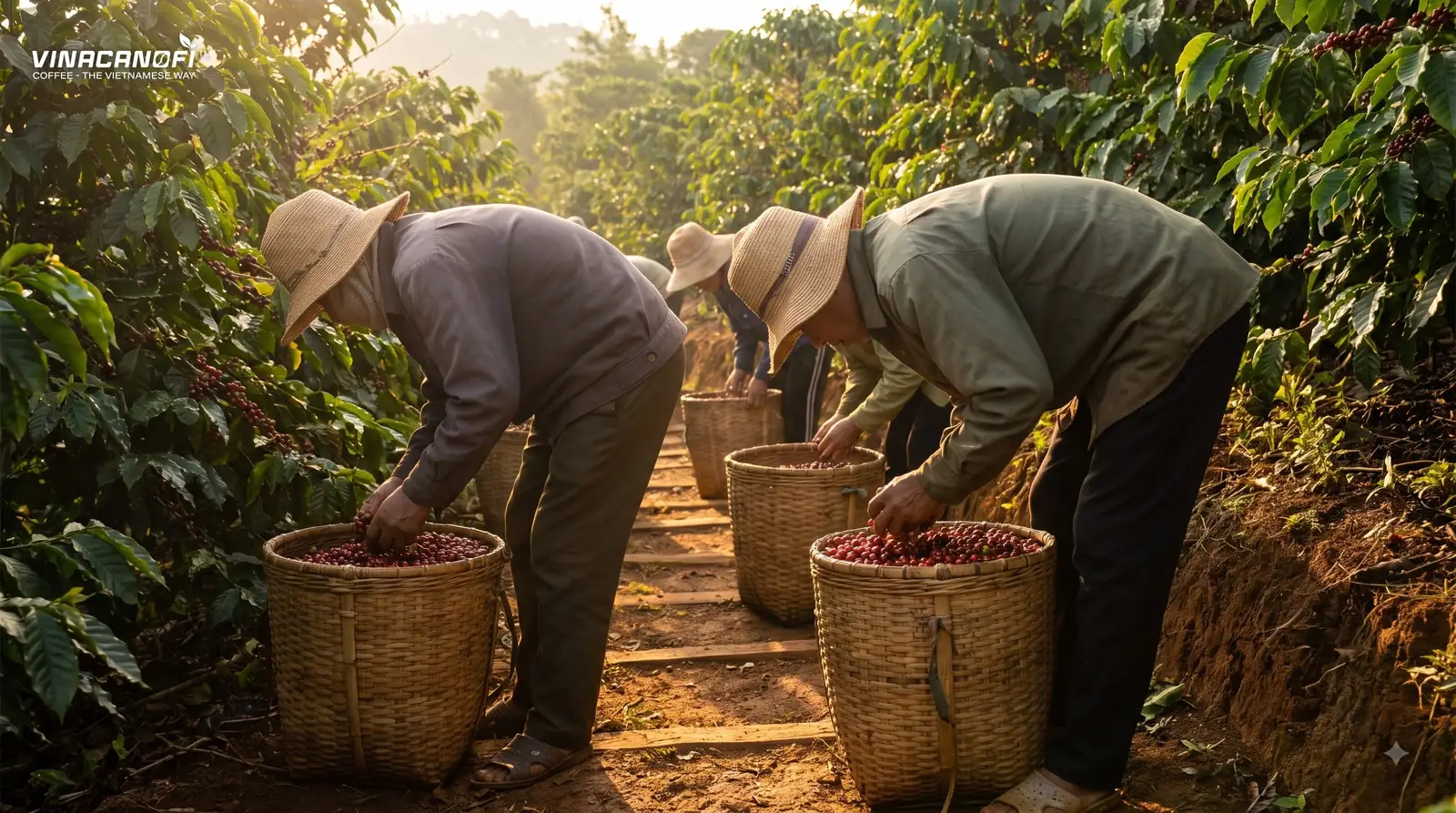
Coffee growers like to say that half of a cup's flavour is decided on the farm. No roaster, however skilled, can rescue beans from unripe or spoiled cherries. That is why farm work runs all year round, not only during the few months of harvest.
How Is Coffee Grown? covered the life cycle of the coffee tree. This article follows a year of farm care and the picking season.
A year on a coffee farm
In Vietnam's Central Highlands, the farm calendar follows two seasons: the dry season (roughly November to April) and the rainy season (roughly May to October). Below is the general rhythm for Robusta. Each area and each year can shift by a few weeks.
| Stage | Timing (approx.) | Main work |
|---|---|---|
| Harvest | October – January | Pick cherries, send them for processing right away |
| After harvest | January – February | Prune, clean up the farm, fertilise for recovery |
| Dry season, flowering | February – April | Water in rounds to trigger flowering |
| Early rainy season | May – July | Fertilise to feed the fruit, weed, remove suckers |
| Mid to late rainy season | July – September | Watch for pests and disease, keep drainage clear |
Five main care tasks
Pruning and shaping. Coffee fruits on new wood. Growers cut out old, diseased and crowded branches so the canopy stays open and light reaches evenly. Many farms keep trees at about hand height so they are easy to tend and pick.
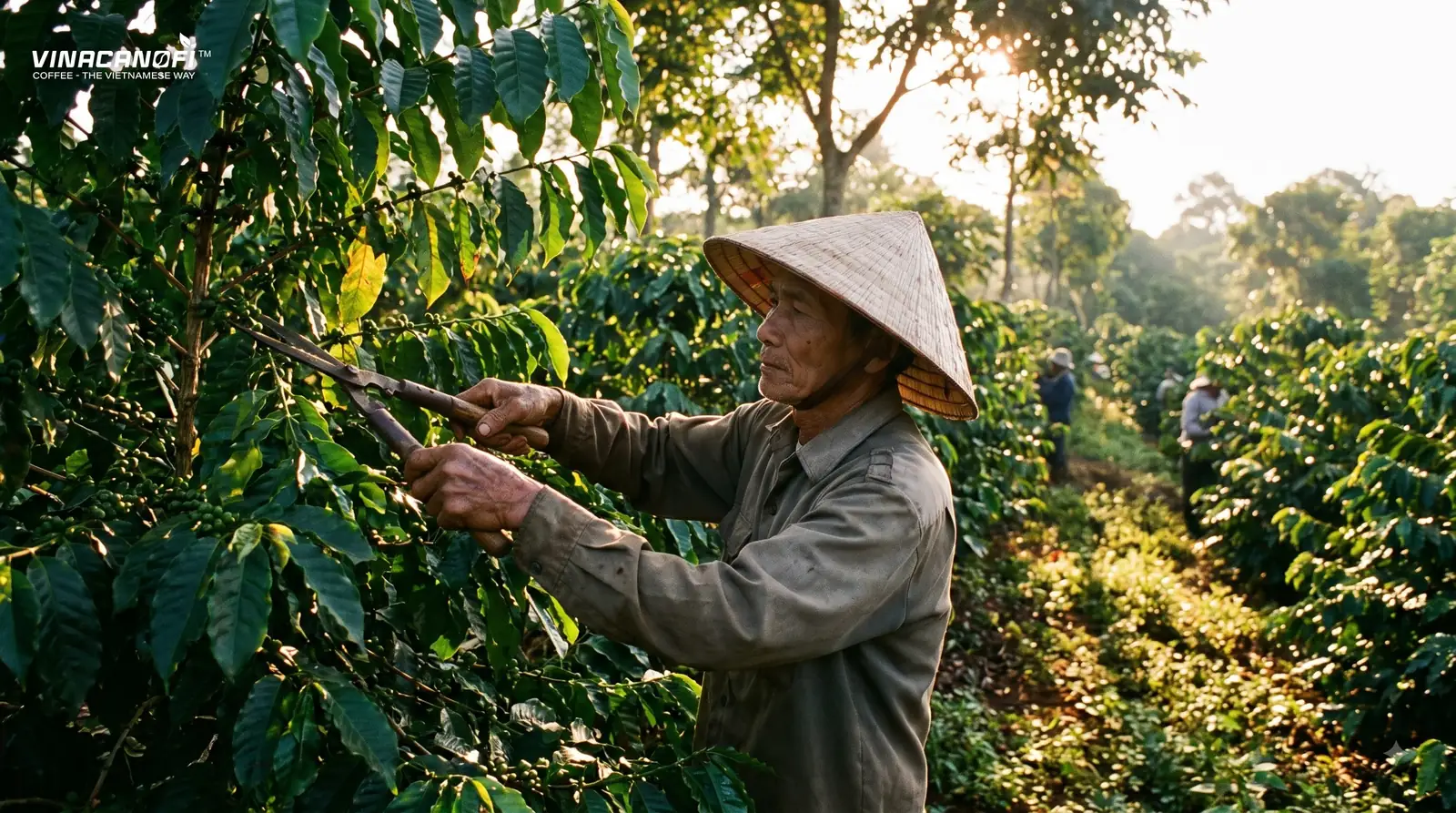
Dry-season watering. After weeks of drought, a thorough watering (or the first rain of the season) wakes up the flower buds. When trees bloom together, the cherries also ripen closer together, which makes picking easier. Several rounds of watering a few weeks apart are usually needed during the dry season.
Fertilising. Coffee trees draw a lot of nutrients from the soil to feed their fruit. Organic matter (composted manure, composted coffee husks) keeps the soil loose; mineral fertiliser adds nitrogen, phosphorus and potassium at each stage. Fertilising at the right time matters more than fertilising a lot.
Weeding and keeping soil moist. Weeds compete with trees for water and nutrients. Many farms mulch around the base with dry leaves or coffee husks, or plant shade trees and windbreaks to hold moisture and soften the harsh sun.
Pest and disease control. A few common problems:
- Coffee berry borer bores into the bean, leaving holes and spoiling the flavour.
- Mealybugs and scale insects cling to fruit clusters and young shoots.
- Coffee leaf rust yellows the leaves and makes them drop early. Arabica is more vulnerable to it than Robusta.
Keeping the farm clean, pruning for airflow and picking off the last cherries at the end of the season are the basic preventive steps before any spraying is needed.
Harvest season
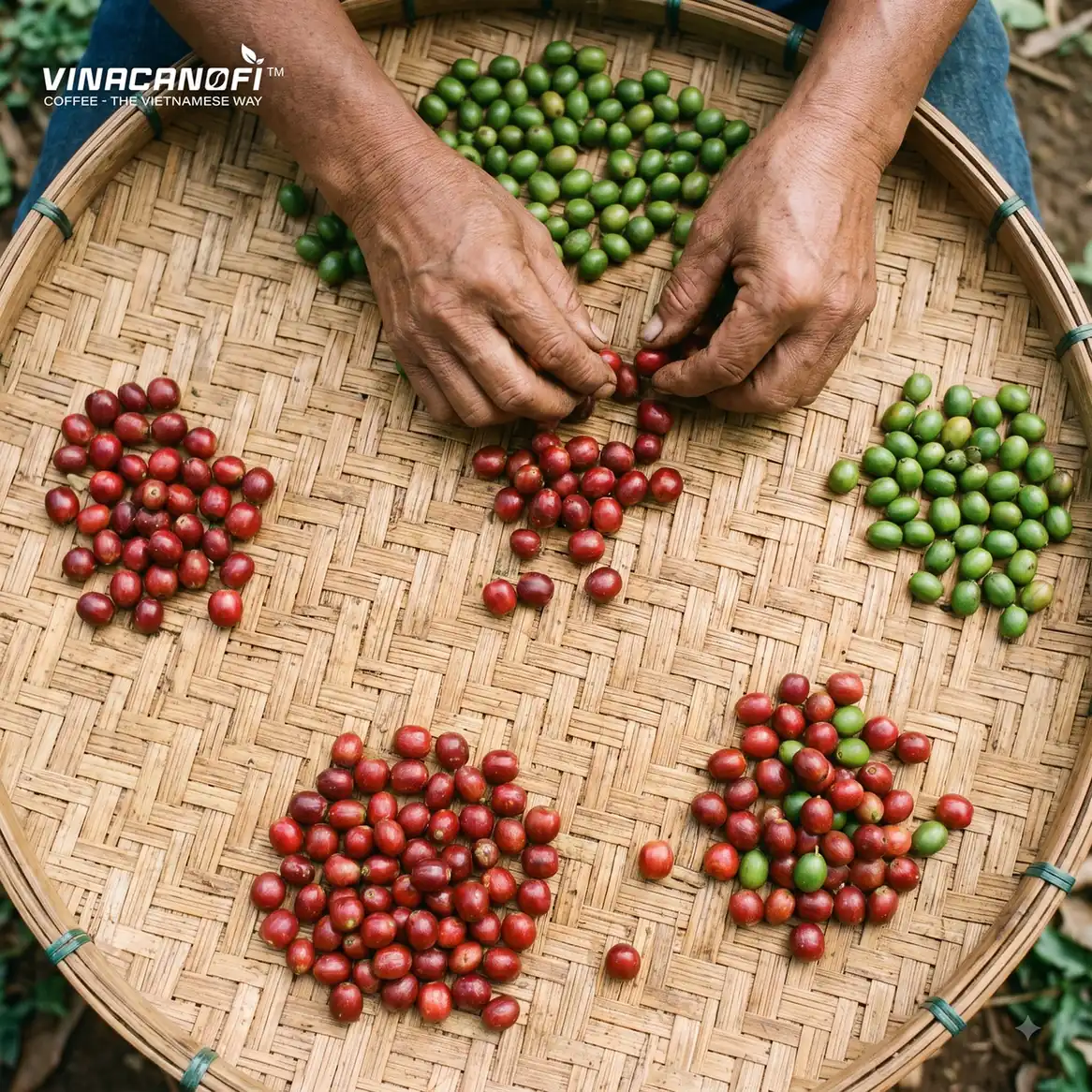
Coffee flowers open in several waves, so one branch often carries green, yellow and red cherries at the same time. That is why picking coffee is not simple.
| Method | How it works | Advantages | Drawbacks |
|---|---|---|---|
| Selective picking | Pick only ripe cherries, revisiting the same tree several times | Evenly ripe beans, sweet and clean cup | Labour-intensive, costly |
| Strip picking | Strip a whole branch of cherries in one pass | Fast, cheap | Mixes in green and dried cherries, leaves and twigs |
| Mechanical harvesting | A machine shakes the cherries off the tree | Very fast on gentle slopes and large farms | Needs flat ground, still requires careful sorting |
In Vietnam, most farms are small family plots on sloping land, so picking is still done by hand. Strip picking is common because labour is scarce. In recent years, many areas have encouraged farmers to pick only once most cherries on the tree are ripe, to raise bean quality.
Why does ripeness matter?
- Ripe cherries have sweet flesh and fully developed beans. Roasted, they give natural sweetness and clear aromas.
- Green cherries hold underdeveloped beans that roast up astringent, harsh and grassy.
- Overripe cherries, cherries dried on the tree or fallen to the ground ferment uncontrollably and pick up mould, giving spoiled sour or earthy flavours.
After picking: the sooner, the better
Fresh coffee cherries start fermenting only a few hours after picking, so they are usually sent for processing the same day. Before that, many farms tip the cherries into a water tank: light and insect-damaged cherries float and are removed. Pickers also take out leaves, twigs and stray green cherries.
From here the cherries move on to processing: drying them whole, removing the skin, or keeping part of the fruit on the bean. Each method gives a different flavour, as explained in Post-Harvest Processing.
The hands behind every bean
Almost all of this work is done by hand, by season, on sloping land. One coffee crop is the result of a farmer's whole year of work. It is also why carefully tended, selectively picked coffee usually commands a higher price: buyers pay for the flavour, and for the effort behind it.
Frequently asked questions
Why does selectively picked coffee cost more?
Pickers pass the same tree several times during the season and take only ripe cherries. It takes more labour and yields less per day, but the beans are evenly ripe, so the cup is sweeter and cleaner.
How much fruit does one coffee tree give each year?
It varies widely with variety, tree age and care. A common estimate is a few kilograms of fresh cherries per tree per season — after processing and drying, only about a fifth of that weight remains as green beans.
Can you eat a ripe coffee cherry?
Yes. The flesh is thin and mildly sweet. In some countries the dried skins are brewed as a tea called cascara.