E04 · Origin & processing
Coffee Varieties Around the World
How Arabica, Robusta, Liberica and Excelsa differ, well-known varieties, and the major growing regions from Ethiopia, Brazil and Colombia to Vietnam.
- Coffee knowledge
- About VINACANOFI
- Updated 21 Oct 2026
Walk into a specialty coffee shop and you may see names on the menu like "Ethiopia Yirgacheffe", "Colombia Supremo" or "Robusta Gia Lai honey". These names tell you two things: which species and variety the coffee is, and which region it was grown in. These are the two root factors of flavour, even before processing and roasting.
Four coffee species worth knowing
The genus Coffea has more than a hundred species, but only a few are grown for drinking.
Arabica (Coffea arabica)
- Origin: the highlands of Ethiopia.
- Share: according to commonly cited industry figures, about 55–60% of world coffee production.
- The plant: prefers high, cool areas; vulnerable to pests and disease, especially coffee leaf rust.
- Flavour: bright acidity, floral, fruity, chocolate notes; little bitterness.
- Caffeine: about 1–1.5% of bean weight.
Robusta (Coffea canephora)
- Origin: the tropical forests of Central and West Africa.
- Share: most of the rest, about 40% of world production.
- The plant: tolerates heat and disease well, high-yielding, grows at low altitudes.
- Flavour: bold, more bitter, heavy body, notes of grain, dark chocolate and roasted nuts.
- Caffeine: about 2–2.7%, often nearly double that of Arabica.
Robusta is widely used in Vietnamese phin coffee, in espresso blends (for a thick crema) and in instant coffee. In recent years, high-quality Robusta that is carefully grown and processed — known as Fine Robusta — has drawn growing attention from coffee professionals.
Liberica (Coffea liberica)
- Origin: West Africa (named after Liberia).
- The plant: tall, with large leaves and large, irregularly shaped cherries and beans.
- Flavour: strong, woody, smoky, sometimes with a very distinctive ripe-fruit note.
- Where it grows: mainly the Philippines (Barako coffee), Malaysia and Indonesia.
Excelsa
Excelsa was once considered a separate species; botanists now classify it within Liberica. It usually tastes tart, with dark-fruit notes. In Vietnam it is known as cà phê mít ("jackfruit coffee") or cà phê Chari, grown in scattered plots in small quantities.
| Arabica | Robusta | Liberica / Excelsa | |
|---|---|---|---|
| World share | About 55–60% | About 40% | Very small |
| Preferred altitude | High (1,000–2,000 m) | Low – medium | Low |
| Resilience | Weaker | Strong | Strong |
| Typical taste | Bright, floral, fruity | Bold, bitter, heavy body | Woody, smoky, ripe fruit |
Well-known coffee varieties
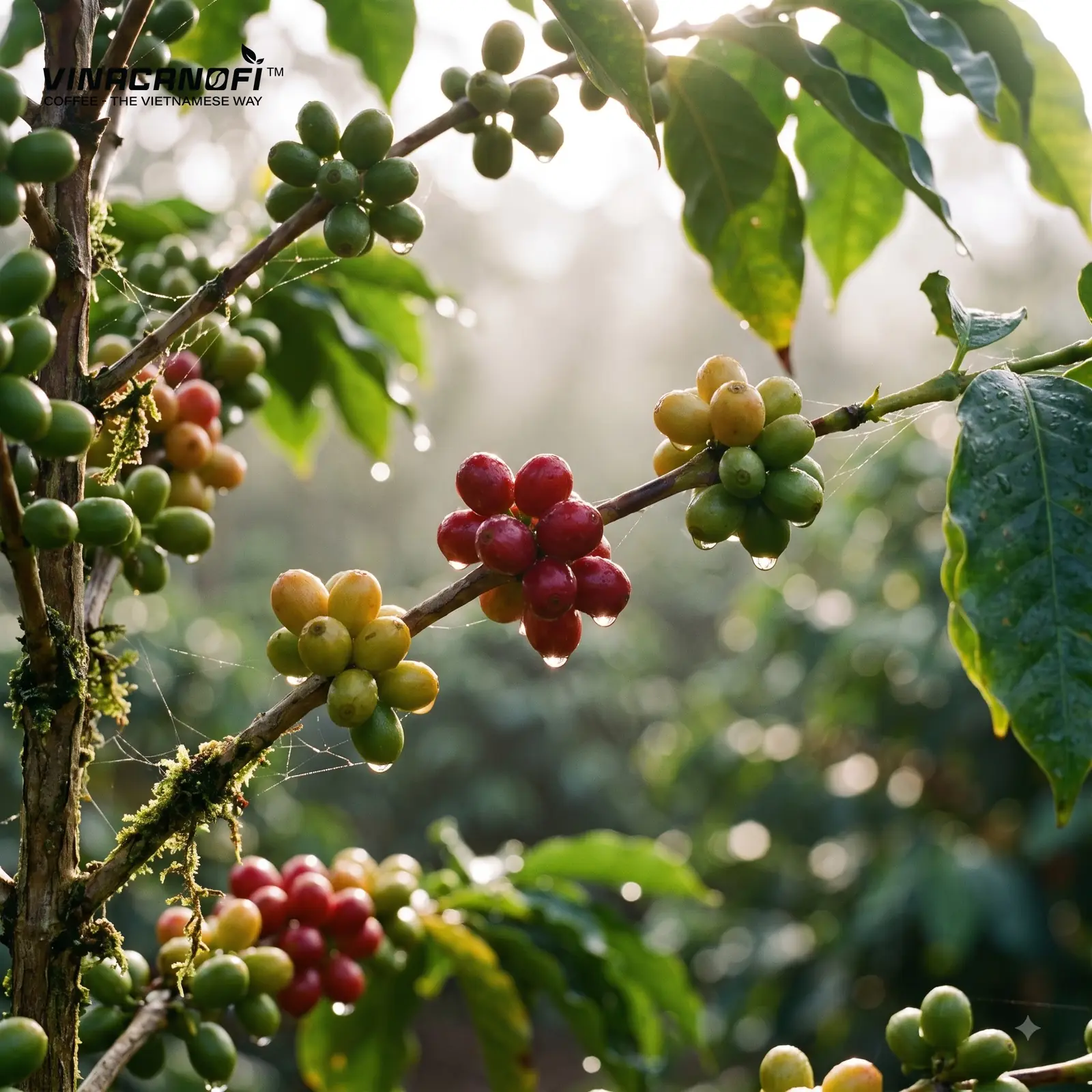
Each species has many varieties, differing in yield, disease resistance and flavour. A few names you will often see:
- Typica and Bourbon — two old Arabica lines, "ancestors" of many of today's varieties. Known for sweetness and balance.
- Geisha (Gesha) — originally from Ethiopia, famous for its jasmine and bergamot aromas when grown in Panama. Often among the highest-priced coffees at auction.
- SL28, SL34 — varieties selected in Kenya, known for bright, blackcurrant-like acidity.
- Catimor — a hybrid carrying resistance to leaf rust, high-yielding. It is the Arabica variety widely grown in Vietnam (Lâm Đồng, Sơn La, Quảng Trị).
- Selected and grafted Robusta — in the Central Highlands, many farms grow selected Robusta clones or graft new shoots to raise yield and bean size.
Major growing regions of the world
Coffee needs a warm climate without frost, so it grows in a band around the equator, roughly between the Tropic of Cancer and the Tropic of Capricorn. This band is called the "coffee belt".
| Region | Key countries | Character |
|---|---|---|
| South America | Brazil, Colombia, Peru | Brazil is the world's largest producer, of both Arabica and Robusta (called Conilon there). Colombia is known for washed Arabica |
| Central America | Honduras, Guatemala, Costa Rica | High-grown Arabica, clean with bright acidity |
| Africa | Ethiopia, Kenya, Uganda | Ethiopia is the birthplace of Arabica, with clear floral and fruit notes. Uganda grows a lot of Robusta |
| Asia | Vietnam, Indonesia, India | Vietnam is the world's second-largest producer and leads in Robusta. Indonesia's Sumatra coffee is bold and earthy |
| Middle East | Yemen | One of the earliest places to grow and trade coffee; the port of Mocha became a familiar coffee name |
Vietnam on the coffee map
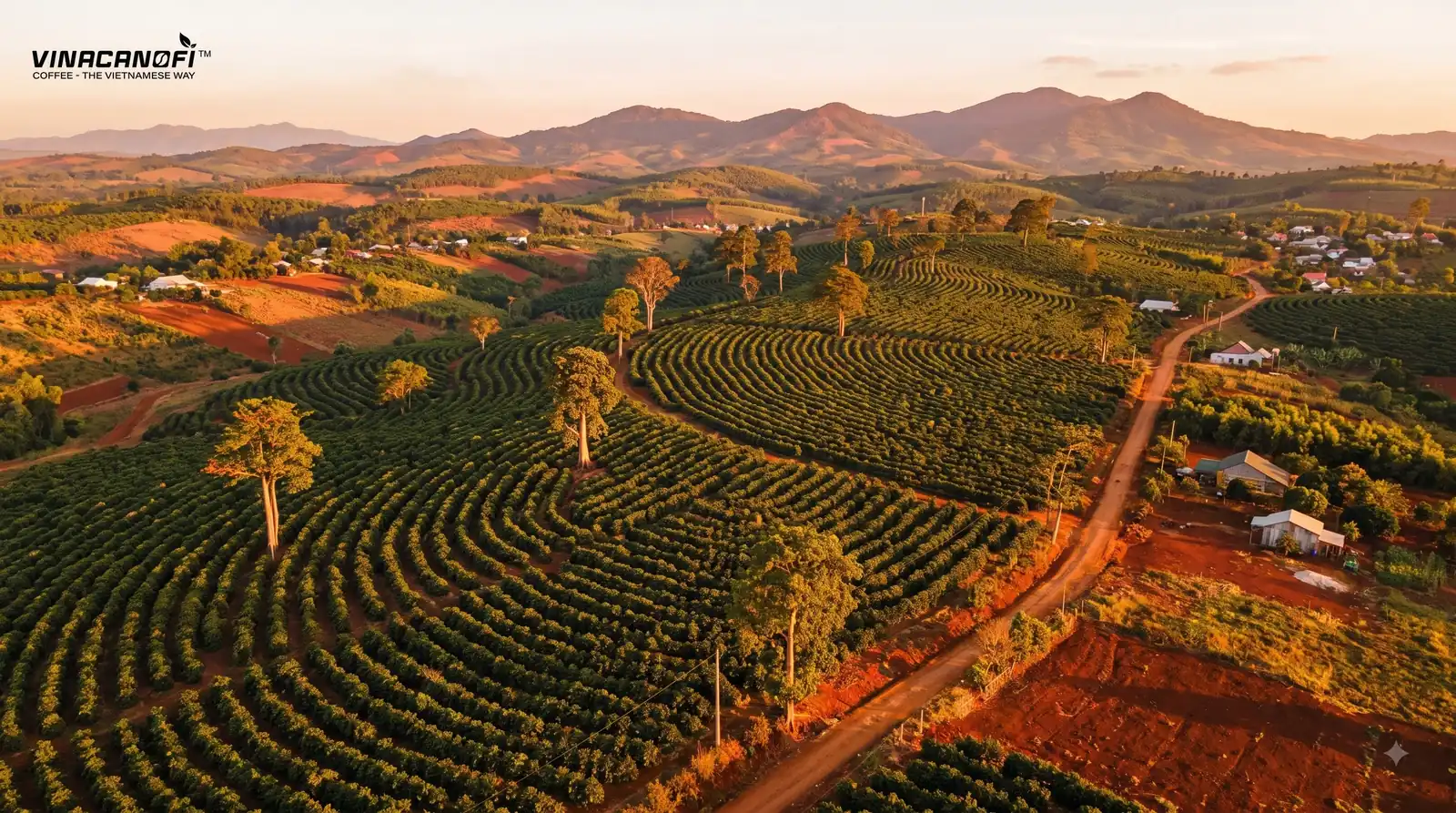
Coffee arrived in Vietnam in 1857, according to commonly cited industry histories. More than a century and a half later, Vietnam has become one of the two largest coffee producers in the world. Most of its output is Robusta, grown in the Central Highlands on red basalt soil. Arabica makes up a smaller share, in high, cool areas such as Cầu Đất (Lâm Đồng), Sơn La and Khe Sanh (Quảng Trị).
Choosing coffee by taste
No species or region is "the best". If you like a bold, bitter cup that pairs well with condensed milk, Robusta or a Robusta-heavy blend is the familiar choice. If you prefer something lighter, brighter and more aromatic, try Arabica, especially washed Arabica from high altitudes. The best approach is still to taste several side by side — something How to Evaluate a Great Cup of Coffee explains step by step.
Frequently asked questions
What is the difference between a coffee species and a variety?
A species is a botanical classification, such as Coffea arabica and Coffea canephora (Robusta). Varieties are lines of plants within one species that have been selected or bred, such as Bourbon, Typica or Catimor — much like different rice varieties of the same rice plant.
What is "peaberry" coffee?
Peaberry is not a variety. It is a cherry with a single round bean instead of two flat ones, and it occurs in both Arabica and Robusta. Peaberries are usually separated out during sorting.
What is civet coffee?
It is coffee made from beans that have passed through the digestive tract of a civet — not a species or variety of coffee. Many animal welfare organisations have spoken out against keeping civets caged to produce it.