E35Going deeper
From Green Bean to Bag — the Roasting Process
From sorting and roasting to cooling, resting, grinding and packing — how green coffee becomes a bag of roasted coffee, and how roast levels differ.
The bag of coffee you open in the morning has been through many steps. Hard, almost odourless green beans become fragrant brown ones through heat, time and careful control. Understanding the roasting process helps you read labels better and see why the same bean can produce very different cups.
The process at a glance
Industrial roasting, large or small, generally follows these steps:
- Receiving and storing green beans;
- Sorting, removing defective beans and foreign matter;
- Roasting;
- Rapid cooling;
- Resting and degassing;
- Grinding (if sold ground);
- Packing;
- Quality control throughout.
Green beans and sorting
Green beans are coffee that has been processed after harvest (see Post-harvest processing). Before roasting, they are screened by size, and black, broken and insect-damaged beans, silverskin and debris such as small stones and twigs are removed. This matters because a few defective beans can give a cup an off taste. Beans of even size also roast more evenly.
Roasting: where flavour is made
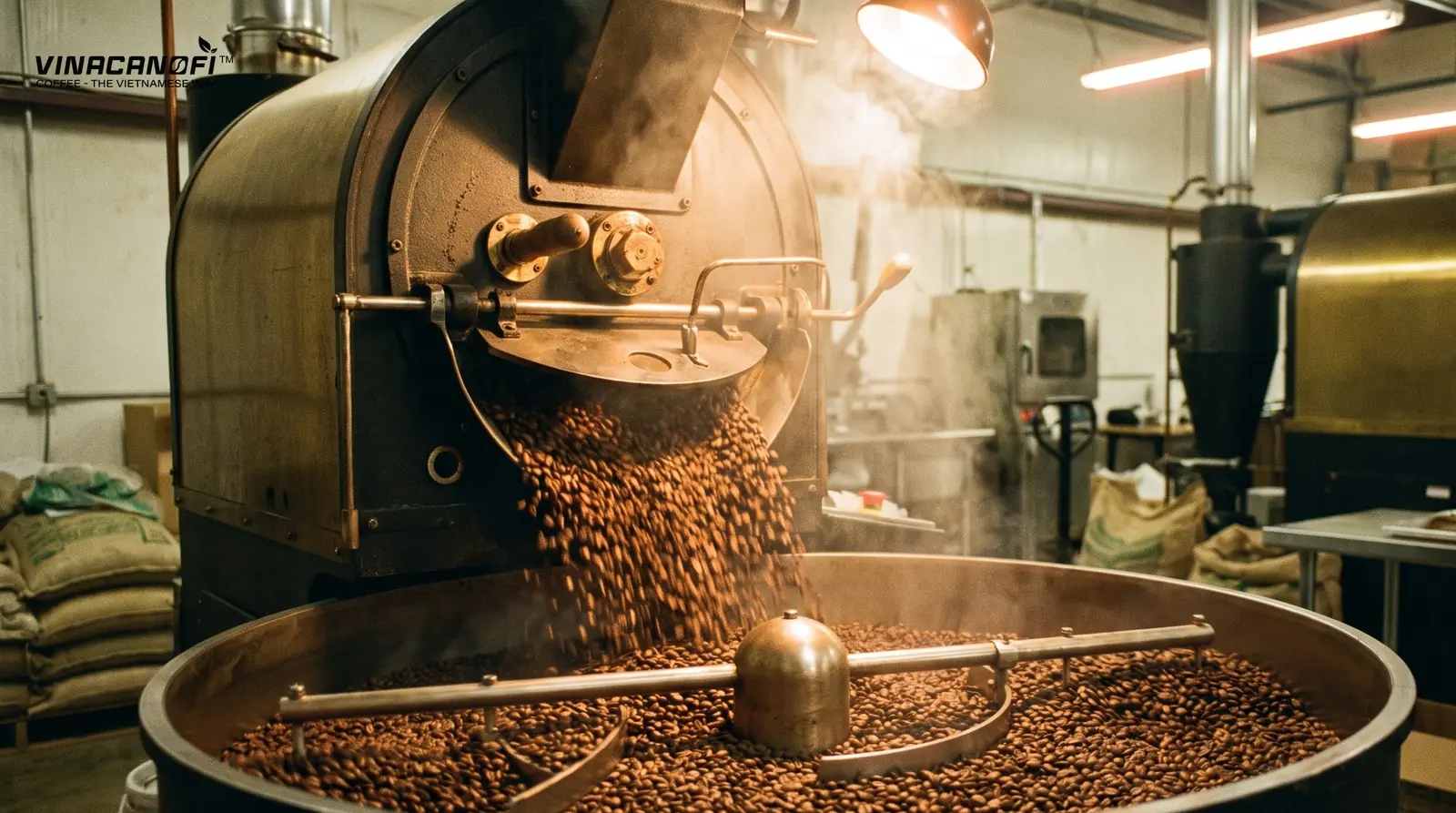
Roasting is the decisive step. Beans go into a drum or hot-air roaster and pass through several stages:
- Drying phase: the beans lose moisture and turn from green to pale yellow. They do not yet smell much like coffee.
- Maillard reaction: as heat rises, sugars and amino acids in the bean react, producing brown colour and hundreds of aroma compounds. This is when notes of toast, caramel and roasted nuts appear.
- First crack: beans expand and split with a "crack" as steam and gases escape. From here, the roaster can stop to reach a light-to-medium roast.
- Second crack: if roasting continues, beans crack again at dark roast levels. Oils move to the surface, bitterness and smokiness rise, and acidity falls.
The roaster watches temperature, time and bean colour to choose the stopping point. A difference of a few dozen seconds at the end of a batch can change the flavour noticeably.
Cooling and resting
As soon as roasting stops, beans must be cooled quickly (usually by drawing air through a perforated tray) so leftover heat does not keep roasting them. They are then rested. Freshly roasted beans release a lot of CO2, so they need time to degas before packing or brewing; how long depends on roast level and use. This is also why bean bags often have a one-way valve.
Grinding and packing
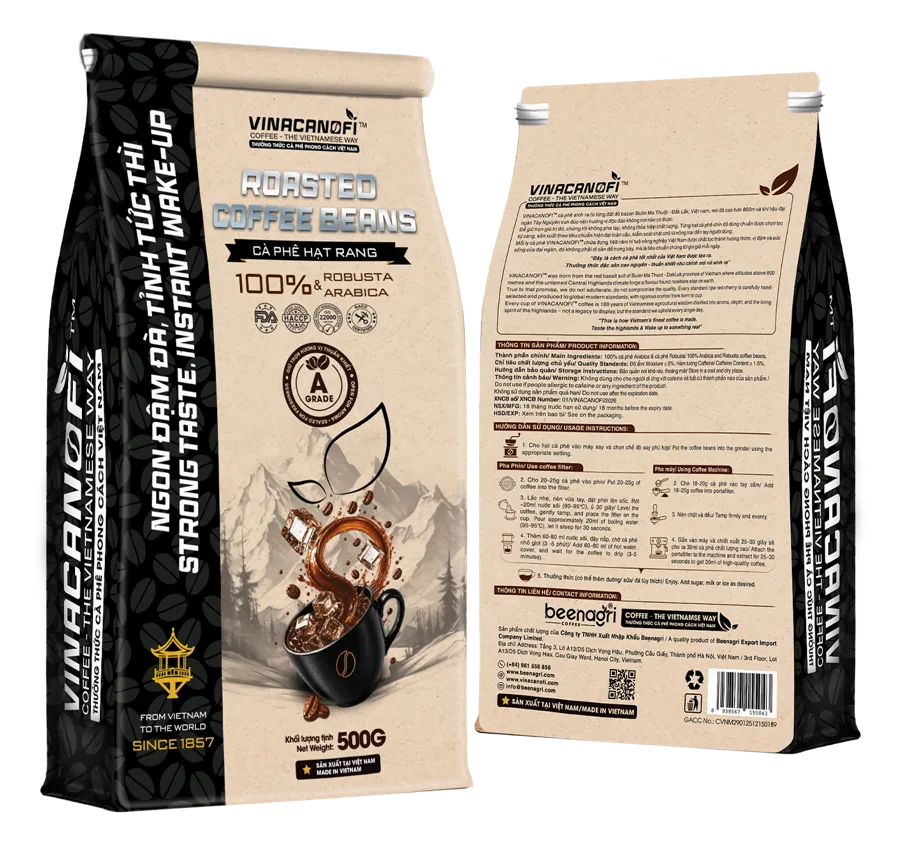
Roasted coffee can be sold whole or ground. Whole beans hold aroma longer because less surface is exposed to air; ground coffee is convenient but loses aroma faster. The grind size should suit your brew method (see Brewing basics). Packaging aims to block oxygen, light and moisture, the three great enemies of flavour.
How light, medium and dark differ
| Roast level | Bean colour | Flavour tendency |
|---|---|---|
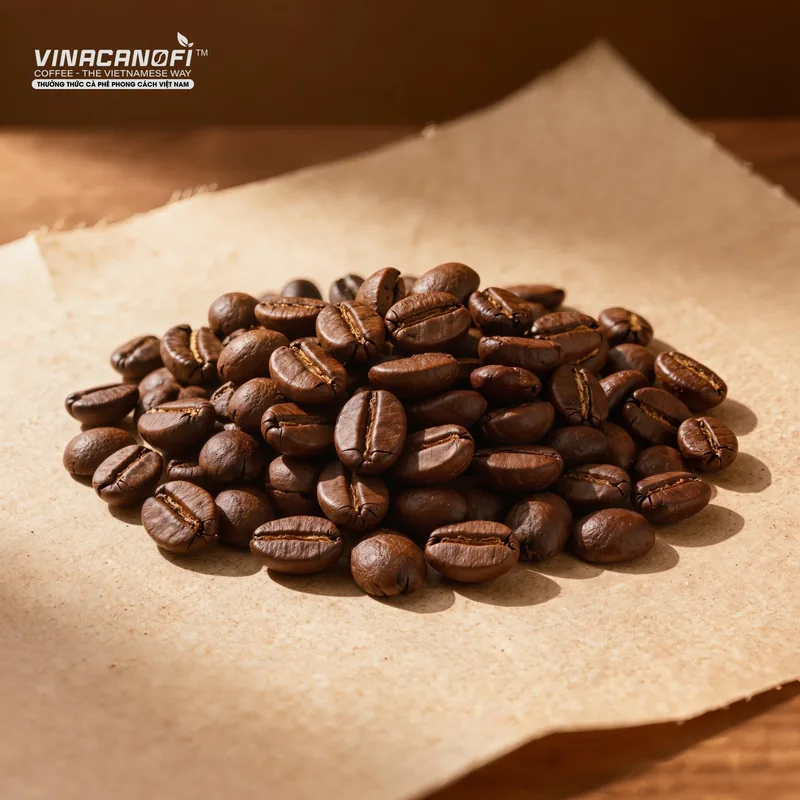
| Light | Pale brown, dry surface | Clear acidity, fruity and floral notes, little bitterness |
| Medium | Medium brown | Balance of acidity, sweetness and bitterness; caramel and roasted-nut notes |
| Dark | Deep brown, often oily | Bitter, full-bodied, smoky and dark-chocolate notes; little acidity |
There is no single "right" roast, only the one that suits your taste and brew method. Traditional Vietnamese phin coffee often favours medium-to-dark roasts.
Quality control
A well-run roasting facility checks quality at many points: incoming green beans, colour consistency after roasting, defective beans, line hygiene, and tasting samples from each batch. Systems such as HACCP and ISO 22000 provide a food-safety management framework for these steps.
Continuing the journey
After roasting, the cup still depends on how you store and brew. Read How to evaluate a good cup of coffee to learn tasting, and Standards and certifications in coffee to learn more about food safety.
Frequently asked questions
What are first crack and second crack?
They are the cracking sounds made as beans expand and split when steam and gases escape. First crack usually marks the move into the light-to-medium range; second crack arrives at darker roasts.
Why isn't freshly roasted coffee packed straight away?
Fresh beans still release a lot of CO2. Letting them rest and degas for a while makes packing more stable and the cup more pleasant.
Is a darker roast a better roast?
No. Roast level is a matter of taste. Light roasts keep more acidity and fruity notes; dark roasts lean towards bitterness, body, caramel and smoky notes.