E37Going deeper
Organic and Sustainable Coffee
What organic, Fair Trade and Rainforest Alliance labels mean, plus shade-grown coffee, soil, water and the growers' role in sustainable farming.
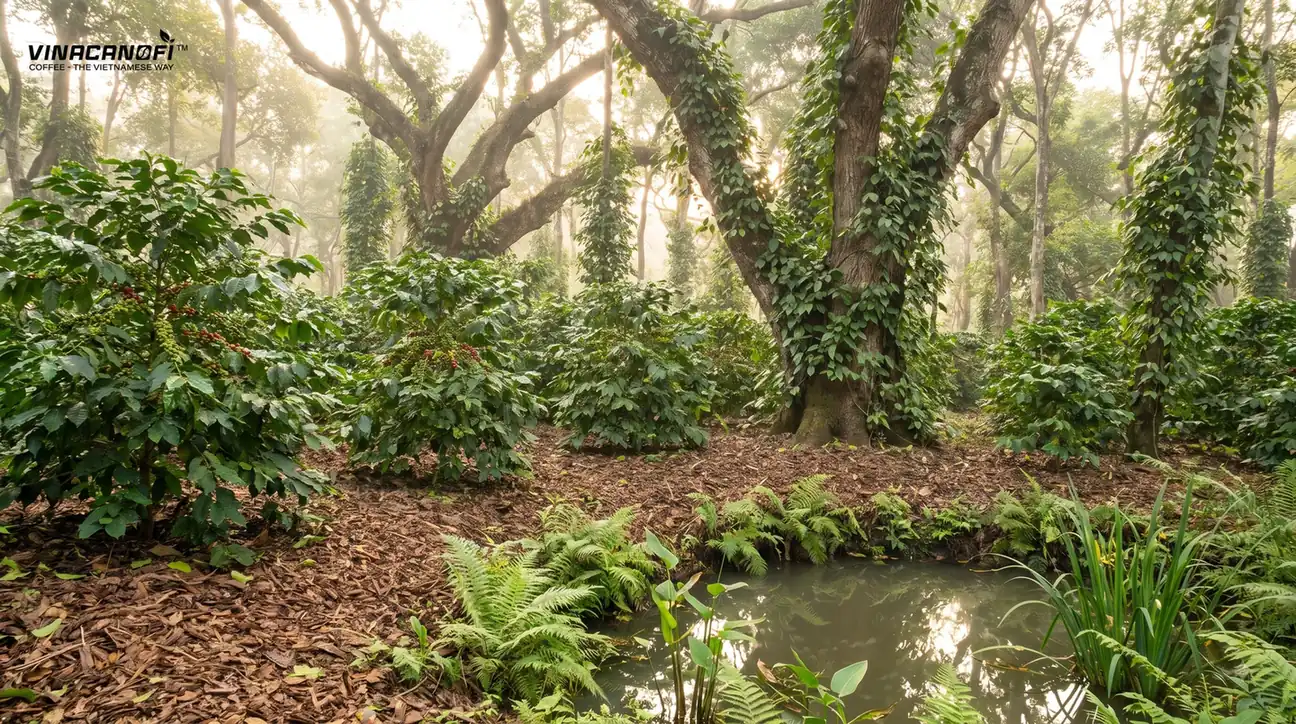
For any cup of coffee, people increasingly ask "how was it grown?" On packaging you may see words like organic, Fair Trade or Rainforest Alliance. This article explains what they mean, and why soil, water, shade trees and growers are all part of the word "sustainable".
What does "sustainable" mean?
Sustainable farming means growing so that this year's harvest does not prevent future harvests: soil is not exhausted, water is not drained, the ecosystem around the farm stays intact, and growers earn enough to carry on. It is not one label but a set of practices.
Three common certification labels
What follows is a general description, not tied to any brand. Detailed standards are set by each organization and may change over time.
| Label | Focus | Main idea |
|---|---|---|
| Organic | Farming method | Restricts or bans synthetic fertilizers and pesticides; manages soil and biodiversity. Several systems exist depending on the market |
| Fair Trade | Trading relationship | Aims for fair prices and terms for growers, with funds for community projects |
| Rainforest Alliance | Environment and livelihoods | Requires protection of forests, water and biodiversity, and decent conditions for farm households |
Points to remember:
- Each label is granted after an independent body audits the farm or supply chain, usually with periodic checks.
- The labels are not mutually exclusive: a lot can hold several certifications, or only one.
- Certification costs money and paperwork, so many smallholders farm carefully without joining any system. Having no label does not mean irresponsible farming.
Shade-grown coffee
Coffee is naturally a cool-loving plant. Growing it under shade trees is a practice often mentioned in sustainable farming:
- The canopy softens harsh sun and keeps the farm's temperature steadier.
- Fallen leaves cover the soil, hold moisture and add organic matter.
- Shade trees shelter birds and beneficial insects.
- Cherries often ripen more slowly, which many in the industry believe can help flavor develop more clearly.
However, shade systems do not suit every region or variety. Growers weigh climate, altitude, variety and yield.
Soil and water
These two resources decide how long a coffee farm can last.
- Soil: mulching with leaves, cherry husks or grass; composting; intercropping to curb erosion on slopes.
- Water: irrigating at the right time and in the right amount; treating wastewater from wet processing so rivers and streams are not polluted. The Central Highlands has a pronounced dry season, so water management is always a major challenge.
These practices do not create "magic" flavor, but they keep the farm healthy and harvests steady over the long term.
The growers' role
Every sustainable practice is ultimately carried out by growers. For them to choose methods that take more effort, income from the harvest must be enough to make up for it. That is why sustainability programs often come with technical support, training and clear purchasing relationships. A transparent supply chain lets consumers know where coffee comes from, and lets growers be recognized for their work.
What can you do as a consumer?
- Read labels closely. Look for the certifier's name and code, rather than vague words like "natural" or "green".
- Ask about origin. A trustworthy brand is ready to say where and how its coffee is grown.
- Buy what you need and store it properly to avoid waste. See Storing Coffee Beans.
- Choose by your own values. A label is a reference tool, not an absolute measure.
Read next
How Coffee Is Grown follows the journey from plant to cherry, and Specialty and Commercial Coffee covers bean quality and traceability.
Frequently asked questions
Does organic coffee mean no chemicals at all?
Not exactly. Organic certification bans or restricts synthetic fertilizers and pesticides, but specific rules differ by system and market.
Are Fair Trade and organic the same?
No. Organic focuses on farming methods and inputs. Fair Trade focuses on the trading relationship with growers, such as minimum prices and community support.
Does VINACANOFI hold organic, Fair Trade or Rainforest Alliance certification?
Currently VINACANOFI products do not carry these labels. The brand only states what is confirmed: coffee raw material from the Central Highlands (Tây Nguyên) and transparent information.