E38Going deeper
Cold Brew and Espresso — Two Ways to Extract
How cold brew and espresso differ in temperature, pressure, time, ratio and flavor, and how to choose the style that suits your taste and situation.

The same coffee bean can become an espresso in half a minute or a cold brew that waits overnight. The two sit at opposite ends of one principle: using water to draw flavor out of ground coffee. What differs is whether the water is hot or cold, fast or slow, pressurized or not. This article explains each method and helps you pick the right one.
What is extraction?
When water meets ground coffee, it gradually dissolves what is inside the bean: acids, sugars, aromatic oils and the compounds that taste bitter. They do not come out all at once. Generally, sour notes and fruity aromas come out early, sweetness in the middle, and bitterness and astringency late. Temperature, time, grind size and water pressure decide what you take. Brewing Basics explains this in more detail.
Espresso: hot, fast, pressurized
Espresso uses a pump to push hot water (typically about 90–96 °C) through finely ground, tightly packed coffee at around 9 bar. A shot takes about 25–30 seconds. The pressure forces water through a dense bed of coffee in a short time, producing a concentrated, intense cup, often topped with a golden-brown foam called crema.
A common ratio is 1 part ground coffee to about 2 parts liquid by weight, which is very strong. That is why espresso is usually served in small cups or used as the base for milk drinks. Espresso is now a familiar part of Vietnamese cafés; see Espresso in Vietnam.
Cold brew: cold, slow, no pressure
Cold brew steeps coarsely ground coffee in cold or room-temperature water for roughly 12–24 hours, usually in the refrigerator, then filters out the grounds. With no heat and no pressure, extraction is slower and more selective.
The ratio is very different: many people use about 1 part coffee to 4–8 parts water by weight, depending on whether they want a concentrate (to be diluted) or a ready-to-drink version. Because it is often concentrated, cold brew is usually topped up with water, ice or milk.
Vietnamese brewing has its own cold variations; read more in Vietnamese Cold Brew.
Quick comparison
| Espresso | Cold brew | |
|---|---|---|
| Water | Hot, about 90–96 °C | Cold or room temperature |
| Pressure | About 9 bar | None |
| Time | 25–30 seconds | About 12–24 hours |
| Grind | Very fine | Coarse |
| Coffee : water ratio (by weight) | About 1 : 2 | Typically 1 : 4 to 1 : 8 |
| Equipment | Espresso machine | Steeping jar, bottle, filter bag |
| Typical impression | Intense, concentrated, crema, clear bitterness and aftertaste | Smooth, less sharp acidity, softer, gentle aroma |
These figures are common reference points; every café and every person has their own recipe.
Where does the flavor differ?
Hot water extracts more aromatic compounds and acids, so espresso often has clear aroma, bright flavor and a long finish. Cold water extracts fewer of them, so cold brew is often described as smooth, rounded and low in acidity. This is a general description, not a rule: the beans, roast level and method all change the result.
Many people also find cold brew "easy to drink" because the bitterness feels softer. But the caffeine in a cup depends on how much coffee is used, the ratio and the cup size, so you cannot say which method is "stronger" without knowing the recipe. For daily intake, see Caffeine.
Which should you choose?
- You like a hot, strong, quick cup, or a base for milk: espresso.
- You like a cold, smooth cup prepared ahead, even on a hot day: cold brew.
- You have no machine: cold brew needs only a jar, a filter and time. Espresso needs a machine that builds pressure; manual brewers come close but do not replace it.
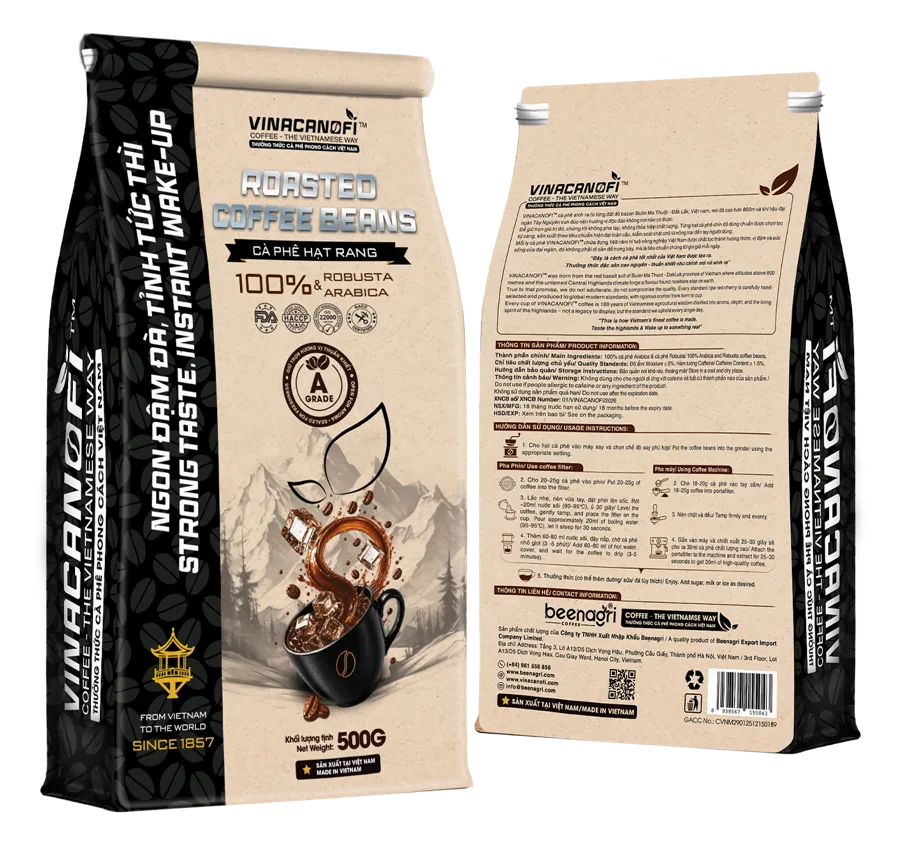
Whichever you choose, fresh beans and the right grind matter most. VINACANOFI Roasted Coffee Beans can be used for many brewing styles; choose a grind that suits your equipment.
If your cup comes out sharply sour, harshly bitter or weak, continue with Common Brewing Mistakes and How to Fix Them.
Frequently asked questions
Is cold brew just iced coffee?
No. Iced coffee is coffee brewed hot, then chilled or poured over ice. Cold brew is coffee steeped in cold water for many hours.
Can I use dark-roasted beans for both?
Yes. What matters is the right grind for each method: very fine for espresso, coarse for cold brew.
How long does cold brew keep?
Keep it sealed in the refrigerator and drink it within a few days so the flavor stays fresh. Follow the guidance for the equipment you use.